Let Nationwide Ladder & Equipment Help You Find What You Need.

10 Best Ladder Safety Training Tips for a Safer Work Environment?

In any work environment, ladder safety training is crucial. Ladders are common tools that many employees use daily. However, improper use can lead to serious injuries. Each year, thousands of accidents occur due to ladder-related mishaps. Many of these accidents stem from a lack of knowledge or poor training.

Effective ladder safety training addresses essential techniques. It emphasizes the importance of inspecting ladders before use. This includes checking for damage, ensuring proper placement, and using the right ladder for the job. Workers often overlook these simple steps. They might rush to complete tasks, ignoring vital safety measures. This can create a dangerous situation for themselves and their coworkers.

Reflecting on past incidents can be eye-opening. By learning from mistakes, teams can improve their safety protocols. Understanding that ladder safety training is not just a formality is key. It should be an integral part of workplace culture. Fostering a safety-first mindset can lead to a more secure work environment for everyone involved.

10 Best Ladder Safety Training Tips for a Safer Work Environment?

Understanding Ladder Safety: Key Statistics and Training Importance

Ladders are common tools in various workplaces, yet they are frequently misused. Statistics show that falls from ladders account for a significant percentage of workplace injuries. Proper training can reduce these incidents. Understanding ladder safety is crucial for a safer work environment. Employees must know how to use ladders correctly, regardless of their job role.

Training programs should cover proper ladder selection and appropriate setup techniques. Workers must be aware of their surroundings. Many forget to look out for overhead hazards, which can lead to accidents. It's disheartening that some still ignore basic safety rules. Encouraging a culture of safety can help change these attitudes.

Regular ladder safety training is essential. It reinforces the importance of using ladders correctly and safely. Workers should feel comfortable asking questions when unsure. Clear instructions can prevent injuries and save lives. It's vital to remind everyone that being cautious can mean the difference between a safe day at work and a trip to the hospital. Building awareness and responsibility can transform how ladders are used in the workplace.
Identifying Common Ladder Hazards in the Workplace

Ladders are a common sight in many workplaces, yet they pose significant risks. According to the National Safety Council, falls accounted for over 31% of workplace fatalities in 2019. Many of these incidents involve ladders. Identifying ladder hazards is crucial to ensure a safer work environment.

One key hazard is improper ladder placement. Ladders should be positioned on a stable, level surface to prevent tipping. Uneven ground can lead to accidents. Additionally, using a ladder that is too short often results in overreaching, increasing the risk of falls. A report from the Occupational Safety and Health Administration (OSHA) emphasizes that over 50% of ladder-related injuries stem from misuse.

Another concern involves maintaining ladders in good condition. Worn-out rungs or damaged frames contribute to hazardous situations. A survey by the Bureau of Labor Statistics found that nearly 10% of workers reported using damaged ladders. Moreover, inadequate training on ladder safety increases risks. Many employees might not recognize the signs of a defective ladder. Regular inspections and proper training can significantly mitigate these dangers. It's essential to prioritize these aspects to foster a safer work environment.

Essential Ladder Safety Equipment: Tools and Gear Recommendations

When it comes to ladder safety, the right equipment makes all the difference. Non-slip shoes are essential. They ensure a firm grip on any surface. A tool belt can keep essential tools within reach. This minimizes the need to climb up and down frequently. It’s also crucial to wear a safety helmet. Heads can easily get bumped.


Consistent training is just as important as gear. Workers must understand ladder weight limits. Ignoring this can lead to falls. Always check the ladder for damage. Small issues can lead to significant accidents.


Lastly, consider using stabilizers. They add more support, especially on uneven ground. Having someone spot you can increase safety. Communication is key when working with ladders. Ensure everyone on site is aware of your movements. Safe practices must be second nature to prevent accidents.

Best Practices for Ladder Use: Techniques and Positioning

When using a ladder, positioning matters greatly. Always place the ladder on stable ground. Uneven surfaces can lead to slips or falls. Use a wide base for added support. Ladders should extend at least three feet above the landing. This provides a secure handhold when climbing down.

Consider your body position as you work. Keep your hips centered between the rails. Leaning out too far can make you lose balance. Your feet should be flat on the rungs. Avoid overreaching. It’s easy to think you can stretch a little further, but this often leads to accidents.

Always double-check your gear before use. Wear proper footwear. Non-slip shoes enhance grip and stability. Reflect on your technique after use. Did you feel stable? Did you follow safety protocols? These small reflections can make a big difference in future ladder safety.

Implementing Effective Training Programs for Ladder Safety Compliance

10 Best Ladder Safety Training Tips for a Safer Work Environment?

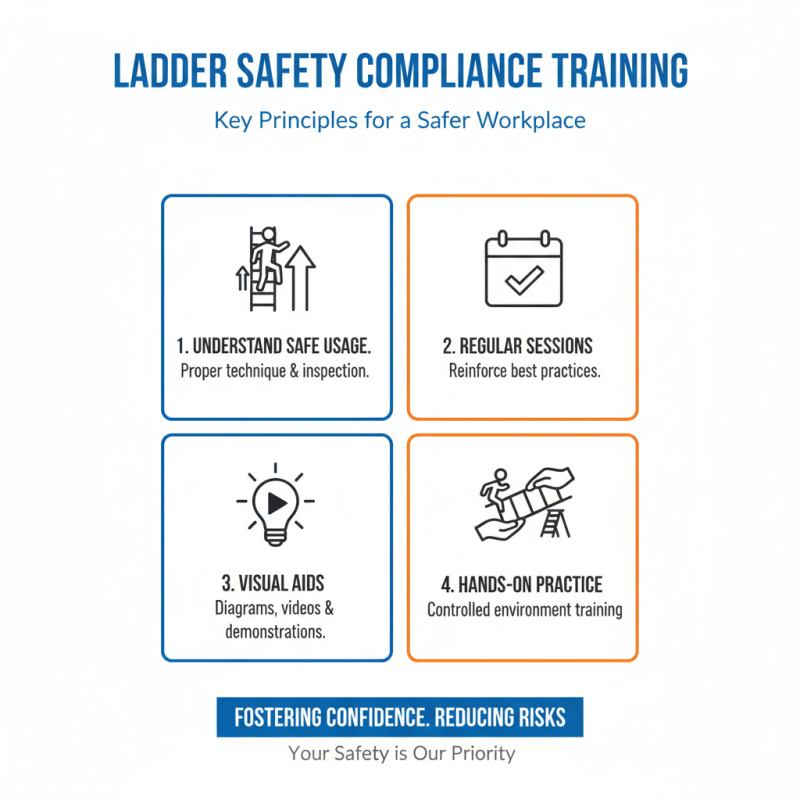
Implementing effective training programs for ladder safety compliance is crucial for any workplace. Employees must understand how to use ladders safely. Regular training sessions should be conducted to reinforce best practices. Visual aids, such as diagrams and videos, can enhance learning. Participants should practice using ladders in a controlled environment. This hands-on approach fosters confidence.

It's important to recognize that not all employees may grasp safety protocols immediately. Some may overlook details. Frequent assessments can identify gaps in knowledge. Workers can benefit from feedback. A culture of safety must be encouraged, where employees feel comfortable discussing concerns. Encourage open communication about near misses or unsafe practices.

Moreover, incorporating real-life scenarios during training can be eye-opening. Workers can share their own experiences, fostering deeper understanding. While comprehensive training is essential, it must be ongoing. Safety compliance is not a one-time event; it requires continuous effort and improvement. Attention to ladder safety can significantly reduce workplace accidents.

TOP
Nation Wide Ladder

Nation Wide Ladder