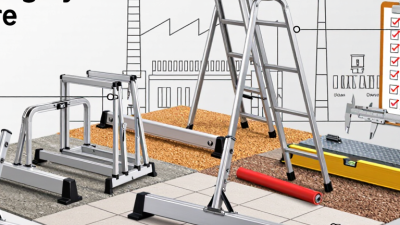
Choosing the best ladder standoff in 2026 is not simply a matter of buying the widest model.
The right design depends on ladder type, wall surface, working height, transport needs, and the pressure placed on each contact point. A ladder standoff can hold the rails away from gutters, windows, and uneven façades. That extra clearance may improve balance. It can also create new risks when the frame flexes or the fittings loosen.
Tom Harvey, a ladder-safety specialist associated with the Ladder Association, offers a useful warning: “A ladder is only safe when its setup matches the task.” That principle should guide every comparison in this article. A heavy-duty steel standoff may suit frequent trade work, while a lightweight aluminum model may be easier for occasional maintenance. Rubber pads can protect painted walls, but they still need clean, firm contact. Small details matter.
Look closely.
The 2026 market includes fixed, adjustable, telescopic-compatible, wide-body, and gutter-access designs. Each type solves a different problem. None is perfect. I have found that product descriptions often sound stronger than real handling feels. Some standoffs appear stable on a showroom floor, yet become awkward beside a narrow window or sloping roofline.
This guide compares structure, load support, installation, portability, surface protection, and long-term reliability. It also questions a common assumption: bigger does not always mean safer. The best ladder standoff is the one that fits the ladder, the surface, and the actual work without forcing the user to improvise.
2026 Top Ladder Standoff Types: Which One Is Best?
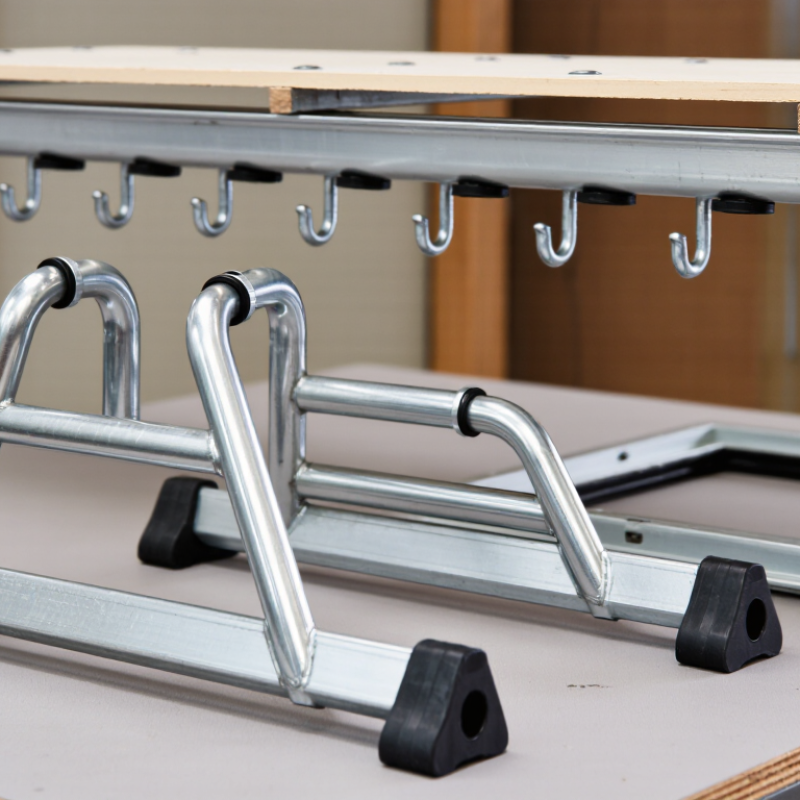
A ladder standoff is a frame fitted near the ladder’s upper section. It holds the rails away from a wall, gutter, or roof edge. This creates space for your hands and reduces pressure on fragile surfaces. The type matters because wall material, access angle, ladder movement, and working height vary widely.
Common options include fixed standoffs, adjustable standoffs, and wide stabilizer frames. Fixed models suit repeated work on one type of surface. Adjustable versions offer better flexibility around gutters or uneven walls. Wide frames spread contact across a larger area. They can reduce sideways movement, but only when installed correctly. The U.S. CDC reported that ladders were involved in 43% of fatal falls in its analysis of national data. That figure deserves attention. A standoff cannot correct poor footing, excessive reach, or an unstable base.
Professional guidance from OSHA stresses level footing, secure positioning, and three-point contact during climbing. In practice, I would inspect the locking pins, fasteners, rubber pads, and rail fit before every use. Small defects matter. A standoff that touches a narrow gutter edge may feel secure but transfer dangerous force. Adjustable types are often the most practical choice for varied maintenance work, while fixed designs may feel more stable for repeated tasks. Still, “best” is not universal. I sometimes favor wider support, then reconsider after checking the surface, ladder angle, and actual load. Each site changes the answer.
A ladder standoff creates space between the ladder and the supporting surface, helping improve stability, reduce pressure on gutters, and provide safer working clearance.
The comparison uses a practical 1–5 score for common performance factors. Adjustable standoffs provide the best overall balance, while wide stabilizer bars are strong choices when surface protection and broad contact are the main priorities. Roof hooks are specialized for sloped-roof work, and fixed wall standoffs are effective for simple, consistent wall access.
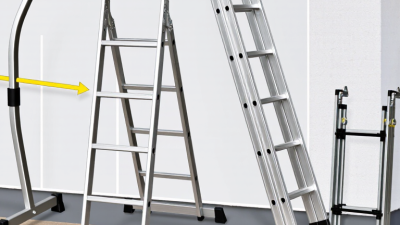
Ladder standoffs create space between the ladder and a wall, roof edge, or other surface. That small gap can improve balance and protect gutters, windows, and painted walls. The main types differ in adjustment, contact area, and setup speed.
Fixed standoffs are simple and usually lightweight. Their wide support points can feel steady on flat walls, but they offer little flexibility on uneven surfaces.
Adjustable standoffs fit changing angles or wall conditions. They are useful when one ladder serves several jobs, although their hinges and locks require careful inspection.
Corner standoffs are shaped to rest near building corners. They can improve positioning, but they may feel awkward on narrow or irregular corners. Some models also provide roof clearance, which helps workers reach higher areas without pressing the ladder directly against fragile edges.
Tips:
Check the standoff’s load rating and compatibility before climbing. Place both contact points evenly. Keep the ladder on firm, level ground. Lock every adjustment completely. A clean rubber pad grips differently from a dusty one. Inspect bolts, welds, and worn feet each time. Never assume a wider attachment makes an unsafe setup safe. In my experience, adjustable designs are convenient, but convenience can invite rushed checks. That is where mistakes begin. Follow the ladder and accessory instructions, and use suitable fall protection when the work height or site conditions require it.
Different work environments demand different ladder standoff designs. On smooth indoor walls, a padded fixed standoff can protect paint and glass. It also creates space for hands and tools. Choose a compact model for corridors, storerooms, or narrow aisles. Check the contact pads before every shift. Small cracks matter.
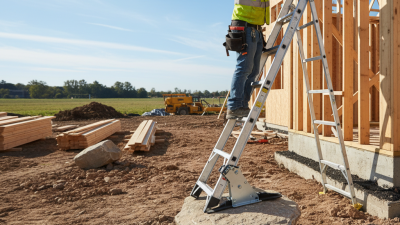
Outdoor construction sites need more control. An adjustable standoff can adapt to masonry, cladding, and changing work heights. A wider frame may improve stability near roof edges, but it can feel awkward around scaffolding. On sloped surfaces, articulated contact points may fit better. Extra width is not a substitute for a level base.
For electrical maintenance, material compatibility and surface separation deserve careful attention. Select a standoff approved for the ladder type and rated load. In damp areas, inspect fasteners for corrosion and remove mud from the feet. Warehouse teams may prefer a lightweight, quick-fitting design, but speed can encourage skipped checks. That weakness deserves honest attention. Match the standoff to the wall, floor, access space, and inspection routine. Read the instructions. Measure twice.
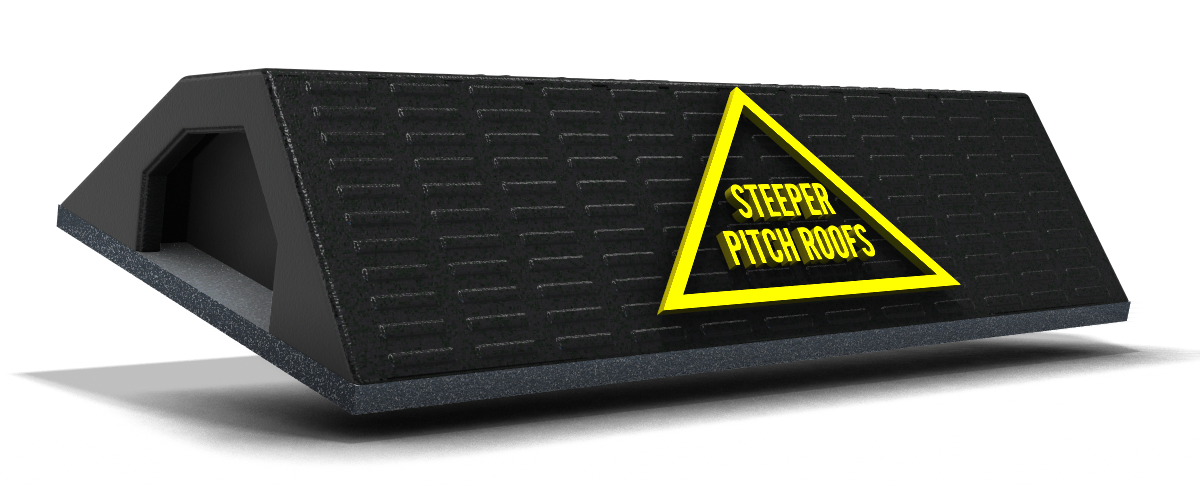
Choosing a ladder standoff should begin with safety, not convenience. A wall standoff spreads the ladder’s weight across two contact points. This reduces sideways movement on smooth walls. Wide models can also protect gutters, windows, and painted surfaces. For roof access, a hook-style standoff may offer better positioning near the edge. However, it needs a firm, compatible surface above the roofline.
Load capacity is another critical comparison. Check the ladder’s rated load, then include your body weight, tools, and materials. A small paint bucket changes the calculation. The standoff must also support the ladder without twisting under pressure. Steel may feel stronger, while aluminum is lighter and easier to carry. That difference matters during repeated setup. Yet, weight alone does not prove reliability.
Installation details are often overlooked. The attachment points should lock securely and remain level before climbing. Inspect bolts, clamps, rubber feet, and welds for damage. A practical test involves applying gentle pressure before placing full weight on the ladder. It is not a perfect test, but it can reveal looseness. Recheck the setup after moving the ladder.
Tips: Choose a standoff that matches your ladder width and work surface. Keep both feet on stable ground. Never improvise with loose boards or damaged hardware. If the wall is fragile, use padded contact points. A second person can watch the setup, especially near roof edges. Sometimes, the “best” type is simply the one installed correctly.
How Can You Choose the Best Ladder Standoff in 2026?
Choosing the best ladder standoff starts with the work surface, not the price. CDC and NIOSH ladder-safety data associate ladders with about 500,000 treated injuries and 300 deaths annually in the United States. A standoff should create stable clearance from gutters, windows, or fragile walls. Check its rated load, connection points, contact width, and compatibility with your ladder model. A wide, rubber-padded design may reduce pressure marks, but padding can wear faster outdoors.
Material also matters. Aluminum keeps the accessory light, while reinforced steel can provide greater rigidity. For frequent exterior work, inspect bolts, welds, rubber feet, and locking mechanisms before every use. OSHA guidance emphasizes maintaining three-point contact and securing ladders against movement. A standoff cannot correct a poor setup angle or unstable ground. That distinction is often missed.
Consider transport and storage too. A large stabilizer may perform well but become inconvenient on narrow access routes. EN 131 and ANSI ladder standards provide useful safety benchmarks, yet certification alone does not guarantee a suitable fit. A practical choice matches the ladder, surface, worker weight, tools, and weather conditions. The cheapest option may appear efficient. It can become expensive after one damaged gutter or failed adjustment. I would recheck the fit every time. There is no universal best standoff, only the best verified match for a specific task.
| Ladder Standoff Type | Adjustment | Typical Construction | Primary Use | Main Advantages | Key Limitations | Best Choice When | Overall Suitability |
|---|---|---|---|---|---|---|---|
| Fixed Wall Standoff | None or limited adjustment | Powder-coated steel or reinforced aluminum with rubber contact pads | Routine work on flat exterior walls, windows, gutters, and siding | Simple design, stable wall contact, quick installation, and generally low maintenance | Offers less flexibility on uneven walls, corners, and changing work positions | You work repeatedly on a relatively flat wall and want a straightforward setup | Excellent for regular wall access |
| Adjustable Wall Standoff | Variable width or angle, depending on the design | Aluminum or steel frame with locking adjustment points and protective pads | Mixed building surfaces, different ladder angles, and changing clearance requirements | More adaptable than a fixed model and can help position the ladder away from obstructions | More moving parts require inspection, correct locking, and careful setup | You need one standoff to accommodate several work locations | Best all-around flexibility |
| Telescopic Standoff | Sliding or telescoping adjustment with a locking mechanism | Nested aluminum or steel sections with locking pins or clamps | Situations requiring different wall clearances or compact transport | Adjustable working position, convenient storage, and useful clearance control | Incorrectly secured sections can create a serious safety risk; mechanisms may wear over time | Portability and adjustable clearance are more important than the simplest design | Strong for mobile professional use |
| Roof Standoff or Roof Hook | Usually fixed; some designs include adjustable support points | Steel or aluminum frame with broad roof-support surfaces and protective padding | Roof access, roof-edge work, and tasks where ladder stability must be maintained near roofing materials | Can distribute contact over a larger area and help keep the ladder positioned at the roof edge | Not intended for every ladder or roof type; roof loading and manufacturer instructions must be checked | The task is specifically on or near a roof and the accessory is approved for that application | Best for roof-specific work |
| Gutter-Friendly Standoff | Generally fixed or minimally adjustable | Lightweight metal or reinforced polymer frame with padded contact areas | Gutter cleaning, fascia inspection, and work near delicate gutters or trim | Helps place the ladder against stronger structural areas instead of directly on the gutter | Does not replace proper ladder leveling or securement; compatibility with gutter geometry varies | You need to work near gutters without using the gutter as the main contact point | Best for gutter protection |
| Multi-Position Standoff | Several preset positions or reversible mounting options | Aluminum or steel brackets with multiple attachment points | General maintenance involving walls, corners, windows, and other obstacles | One accessory can support several common configurations and work environments | May be heavier and more complicated than a dedicated fixed model | You perform varied maintenance tasks and want broad compatibility | Best for versatile maintenance work |
| Corner or Pole Standoff | Usually fixed; shaped contact points may accommodate narrow structures | Rigid metal frame with curved, angled, or dual-point contact surfaces | Work around building corners, poles, columns, and other narrow vertical surfaces | Designed for contact conditions where a standard flat wall standoff may not sit correctly | Specialized design; it may be unsuitable on broad flat walls or incompatible ladder rails | The ladder must be positioned around a corner or against a narrow vertical support | Best for specialized surfaces |

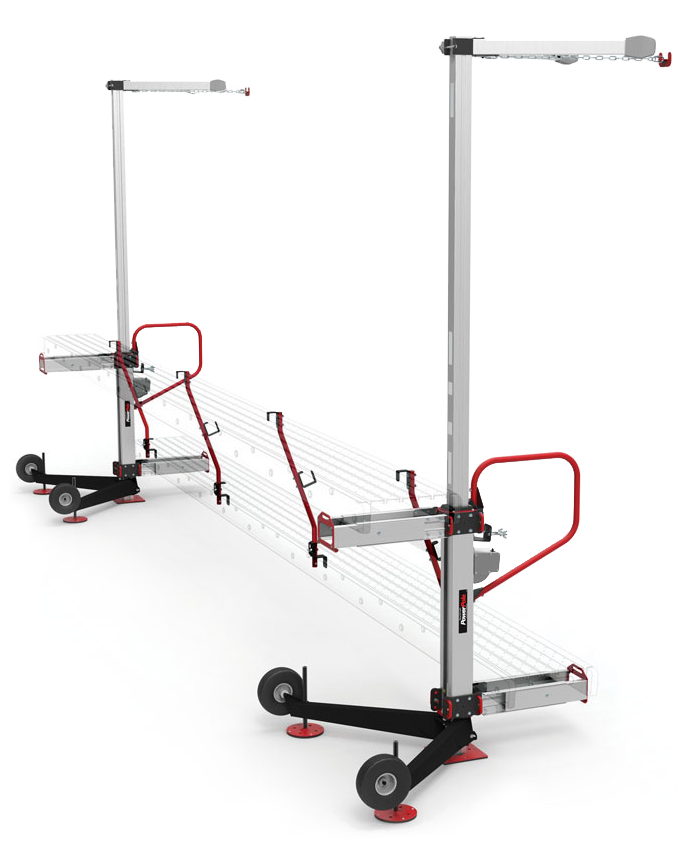
With the ReechCraft PowerPole, traditional scaffolding and pump jack systems are a thing of the past. Our streamlined design gains you access between buildings, on rooftops, around landscaping, and more. The PowerPole is perfect for contract work on residential areas.

Don't miss our WernerCo Sfety and Demo Day BBQ
June 23rd, 2022 from 10am - 2pm
Chance to win giveaways
Cookout from 10am - 2pm
Werner fall protection and Weatherguard Specialists on site to answer any questions and perform safety and product demonstrations.