Let Nationwide Ladder & Equipment Help You Find What You Need.
How to Choose a Top Ladder Hoist in 2026?
Choosing a top ladder hoist in 2026 requires more than comparing prices or lifting capacity. The right model must match the building height, load shape, working frequency, and site conditions. A compact hoist may suit roof repairs, while a stronger unit may be necessary for scaffolding materials, tiles, or boxed equipment.
Michael Bächle, an experienced lifting-equipment industry executive, once emphasized, “Safety and reliability must remain the foundation of every lifting solution.” That principle deserves attention. A ladder hoist should have a clearly stated working load limit, stable anchoring points, dependable braking, and accessible emergency controls. Check the cable, platform, rollers, and mounting frame before every shift. Small defects can become expensive problems.
Look closely at real working details. Can one worker position the unit without awkward twisting? Does the carriage move smoothly beside a narrow wall? Will the controls remain visible in rain or poor light? These questions reveal more than a glossy specification sheet. Certification and manufacturer documentation also matter, but paperwork alone cannot replace practical inspection. That is where many buying decisions become weak.
Noise, storage space, transport weight, and replacement-part availability deserve equal consideration. So does operator training. An impressive ladder hoist can still perform poorly when its setup instructions are unclear. I have found that buyers often focus too heavily on maximum capacity. That can be a mistake. The best choice is usually balanced, serviceable, and suited to daily work—not merely powerful. This guide explores the key factors behind a safer, more dependable purchase in 2026.
Table of Contents
[Hide]
What Is a Ladder Hoist and How Does It Work?
How to Choose a Top Ladder Hoist in 2026?
A ladder hoist is a powered lifting system for moving materials beside a ladder. It usually includes a motor, cable or rope, drum, carriage, controls, and braking parts. The motor turns the drum, winding the cable and pulling the carriage upward. A guide track keeps the load aligned during travel. Limit switches can stop movement at the correct height.
On a typical job, a worker places tiles, tools, or panels inside the carriage. The operator then controls lifting from a safe position on the ground. A reliable hoist should match the load capacity, lifting height, speed, duty cycle, and ladder angle. Check the rated capacity carefully. Wet surfaces, wind, and uneven setup can reduce practical stability. Materials only. Never treat a material hoist as a passenger lift. That shortcut is dangerous.
Tips
Inspect the cable before every use. Look for broken strands, crushing, rust, or unusual slack. Test the brake and emergency stop without a load first. Secure the ladder base and top according to the equipment instructions. Keep people away from the lifting path. I would also record inspections, although many small crews forget this step. Choosing a stronger hoist is not always better; excessive capacity can increase weight, setup effort, and transport problems. Reliable decisions come from site conditions, not attractive specifications alone.
How to Choose a Top Ladder Hoist in 2026? - What Is a Ladder Hoist and How Does It Work?
A practical comparison guide covering ladder-hoist operation, selection criteria, safety requirements, and typical specifications.
| Data Dimension | What It Means | Typical or Recommended Data | Why It Matters When Choosing |
|---|---|---|---|
| Definition | A ladder hoist is a powered lifting system installed on or alongside an extension ladder to raise and lower materials. | Designed for materials rather than transporting people. | It reduces manual carrying on ladders and can improve productivity when materials must reach elevated work areas. |
| Basic Operating Principle | An electric motor turns a gearbox and lifting drum, winch, or traction mechanism. A cable, chain, or lifting line moves the load along the ladder. | Motor-driven lifting with a control pendant, wired switch, or remote control. | The lifting mechanism should provide smooth movement, controlled stopping, and secure load holding. |
| Typical Applications | Moving roofing materials, tools, tiles, solar components, maintenance supplies, and construction materials. | Residential construction, roof repair, building maintenance, solar installation, and renovation work. | Choose a configuration suited to the material shape, loading frequency, roof angle, and job-site access. |
| Rated Load Capacity | The maximum load the hoist is designed to lift under specified operating conditions. | Common light-duty range: approximately 100–250 kg (220–550 lb). | The rated capacity must exceed the combined weight of the material, container, hooks, and any lifting accessories. Never exceed the manufacturer’s stated limit. |
| Working Height | The vertical or inclined distance over which the load can be moved. | Select a system whose usable travel length exceeds the required access height by a safe margin. | Usable lifting distance can be reduced by ladder angle, platform position, cable arrangement, and clearance at the top and bottom. |
| Ladder Compatibility | The ability of the hoist carriage, brackets, wheels, and guide system to fit the ladder structure. | Verify ladder rail spacing, rail profile, rung arrangement, maximum ladder length, and permitted installation angle. | A hoist that does not match the ladder geometry may bind, derail, overload the ladder, or become unstable. |
| Ladder Angle | The angle between the ladder and the ground or supporting surface. | A commonly accepted extension-ladder setup is approximately 75° when site conditions permit. | The angle affects load distribution, carriage movement, braking performance, and the risk of the ladder sliding or tipping. Always follow the applicable ladder and hoist instructions. |
| Lifting Speed | The rate at which the carriage or load travels along the ladder. | Typical light-duty systems: approximately 5–15 m/min, depending on load and design. | A higher speed can reduce cycle time, but controlled movement and safe positioning are more important than maximum speed. |
| Motor Power | The electrical power available to lift the rated load. | Small systems commonly use approximately 0.5–1.5 kW motors. | Motor sizing depends on load, lifting angle, travel distance, duty cycle, gearbox efficiency, and available electrical supply. |
| Power Supply | The electrical source required for the motor and control system. | Common options include 110–120 V or 220–240 V AC, depending on the model and local electrical standard. | Confirm voltage, frequency, plug type, circuit protection, extension-cord requirements, and outdoor-use suitability before purchase. |
| Lifting Medium | The component that transfers pulling force from the drive mechanism to the carriage or load. | Steel wire rope, synthetic line, chain, or an integrated traction system. | Check rated strength, diameter, abrasion resistance, corrosion resistance, inspection requirements, and replacement availability. |
| Load Carrier | The platform, bucket, tray, hook, or cradle that supports the material. | Use a carrier with side retention, a stable base, and a capacity matched to the hoist. | The carrier should prevent materials from shifting, falling, or extending dangerously beyond the ladder path. |
| Control Method | The method used to start, stop, raise, lower, or position the load. | Wired pendant control is common; some systems also provide wireless remote control. | Controls should be clearly marked, easy to reach, protected from unintended activation, and usable from a safe location. |
| Braking and Load Holding | The system’s ability to stop movement and hold the load when power is released or interrupted. | Prefer an automatic electromagnetic or mechanical brake with a power-failure holding function. | Reliable braking helps prevent uncontrolled descent and is essential when working on inclined ladders or elevated surfaces. |
| Overload Protection | A device or control function that limits operation when the load exceeds the safe working capacity. | Thermal motor protection, current limiting, overload sensing, or a mechanical torque limiter. | Protection reduces the risk of motor overheating, cable damage, structural overload, and unexpected failure. |
| Emergency Stop | A clearly identifiable control that immediately stops powered movement during an unsafe condition. | A latching emergency-stop function is recommended for powered lifting equipment. | It allows the operator to stop the hoist quickly if the load snags, shifts, contacts an obstruction, or behaves unexpectedly. |
| Mechanical Stability | The resistance of the ladder and hoist assembly to sliding, tipping, twisting, or detachment. | Use secure ladder footing, approved brackets, adequate tie points, and stabilizers where required. | Hoist stability depends on the complete setup—not just the motor or carriage. The ladder must be suitable for the applied forces. |
| Weather and Ingress Protection | The equipment’s resistance to dust and water exposure. | For outdoor work, select a unit with a clearly stated enclosure rating appropriate to the environment, such as IP44 or higher where specified. | Moisture, dust, and temperature can affect controls, insulation, brakes, and motor performance. Do not use equipment outdoors unless approved for that use. |
| Duty Cycle | The amount of operating time permitted within a specified period before cooling is required. | Follow the stated intermittent-duty rating and observe required rest periods. | Frequent lifting at maximum capacity can overheat a motor even when each individual load is within the rated limit. |
| Portability | How easily the hoist can be transported, assembled, removed, and stored. | For regular relocation, prioritize modular components, manageable lifting weight, quick-release mounts, and practical storage dimensions. | Portable equipment is useful for contractors, but lightweight construction must not compromise frame strength or stability. |
| Noise and Vibration | The sound and movement produced by the motor, gearbox, carriage, and ladder assembly. | Look for enclosed gearing, balanced rollers, secure fasteners, and smooth acceleration. | Lower vibration improves operator comfort and helps reduce wear on the ladder, brackets, cable, and load carrier. |
| Inspection Points | Components that should be checked before and during use. | Inspect the ladder, brackets, rollers, cable or chain, hooks, carrier, brake, controls, fasteners, and power cord. | Stop use if there are frayed wires, damaged rails, loose connections, abnormal noise, brake slippage, or distorted components. |
| Maintenance Requirements | Routine actions needed to keep the hoist operating safely. | Clean moving parts, inspect wear, lubricate only as specified, check fasteners, test safety functions, and replace damaged lifting components. | Maintenance intervals should be based on operating frequency, load conditions, environment, and the manufacturer’s instructions. |
| Operator Training | The knowledge required to set up, operate, inspect, and shut down the hoist correctly. | Operators should understand load limits, controls, emergency procedures, exclusion zones, and pre-use inspections. | Training helps prevent misuse, overloading, unsafe positioning, and operation in unsuitable weather or site conditions. |
| Personnel Safety | Measures that prevent people from being struck by, caught in, or exposed to a suspended load. | Keep people out from beneath and directly beside the moving load; use a controlled exclusion zone. | A ladder hoist should be treated as material-handling equipment. It should not be used to lift or carry people unless specifically designed and approved for that purpose. |
| Compliance Check | Verification that the equipment and work method meet local legal, electrical, ladder, and occupational-safety requirements. | Review the product manual, rated-load information, inspection documentation, electrical requirements, and applicable local regulations. | Requirements vary by country, industry, site, and equipment classification. Compliance should be confirmed before installation and operation. |
| Best Choice for 2026 | A suitable ladder hoist balances safe capacity, compatible installation, controlled speed, reliable braking, portability, and serviceability. | Prioritize verified specifications, overload protection, emergency stopping, secure mounting, accessible spare parts, and clear operating instructions. | The best choice is not necessarily the fastest or most powerful model; it is the system that safely matches the actual ladder, load, height, environment, and work frequency. |
Note: The numerical ranges shown are typical selection references rather than universal limits. Always use the lower limit when site conditions, ladder capacity, accessories, or local regulations impose a stricter requirement.
Related Posts
-

How to Choose the Right Ladder Hoist for Your Needs?
-
2026 Top Ladder Standoff Types Which One Is Best?
-

2026 Top Rolling Scaffold Trends for Global Buyers?
-

2026 Best Ladder Safety Tips for Home and Professional Use?
-
The Ultimate Guide to Choosing the Best Ladder Stabilizer?
-

2026 Best Pivit Ladder Tool for Home Improvement and Safety Tips?
What Can We Help You With?















We Put Everything Within Reach

Revolutionary Roofing Wedge
Featured Product

Streamlined. Safe. Flexible.
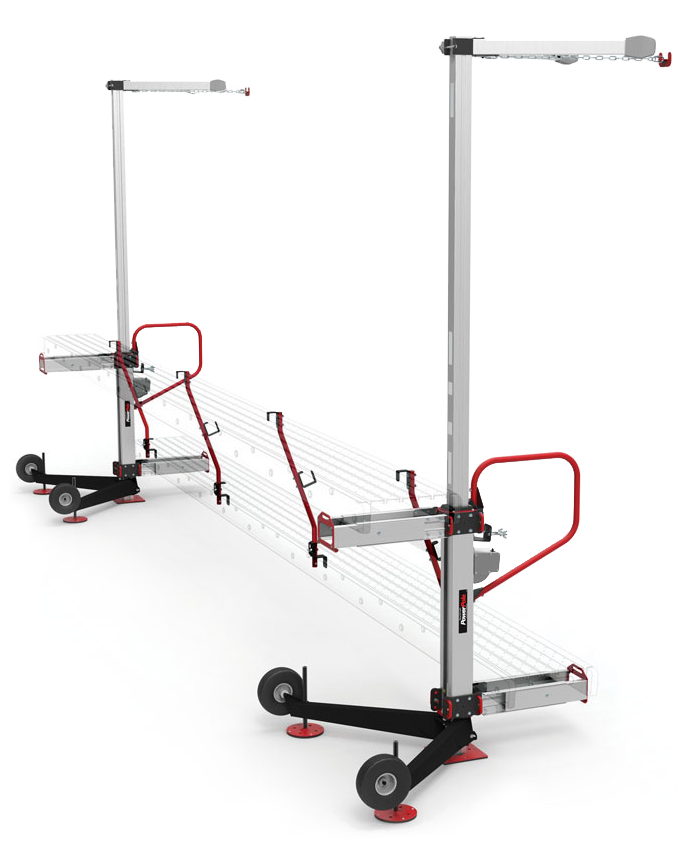
With the ReechCraft PowerPole, traditional scaffolding and pump jack systems are a thing of the past. Our streamlined design gains you access between buildings, on rooftops, around landscaping, and more. The PowerPole is perfect for contract work on residential areas.

Headache Racks That Turn Heads