
NATION WIDE LADDER & EQUIPMENT
NH: 603-434-6911MA: 508-754-3030ME: Regular weekly deliveries from NH
- Home
- Blog
Let Nationwide Ladder & Equipment Help You Find What You Need.
China Top Warehouse Ladders Suppliers for Global Buyers?
Choosing China’s top warehouse ladders suppliers requires more than comparing prices. Global buyers need safe designs, stable production, clear documentation, and dependable export support. A ladder may look simple, yet its platform height, wheel locks, handrails, steps, and load rating affect daily warehouse safety.
Safety scholar James Reason wrote, “We cannot change the human condition, but we can change the conditions under which humans work.” This principle strongly applies to warehouse ladders. Reliable suppliers should explain how their products reduce slips, overreaching, unstable climbing, and awkward handling. Buyers should review aluminum or steel grades, weld quality, anti-slip surfaces, protective coatings, and inspection records. Factory audits can reveal details that product photos hide.
China offers many manufacturers, but quality is not identical. Some factories provide custom dimensions, private labeling, packaging support, and third-party testing. Others mainly compete through low quotations. That difference matters. A low-cost ladder can create higher replacement, injury, and downtime risks. It is not always easy.
A practical sourcing review should examine factory experience, production capacity, sample consistency, quality-control procedures, and after-sales communication. Ask for drawings, test reports, carton dimensions, spare-part policies, and realistic lead times. Confirm whether the supplier understands destination-market requirements before placing an order. Standards and certification claims also need independent verification.
This guide introduces leading Chinese suppliers for global buyers seeking warehouse ladders. It considers product range, manufacturing capability, customization, delivery reliability, and buyer support. No supplier is perfect. Even experienced factories can miss a detail, so careful verification remains essential.
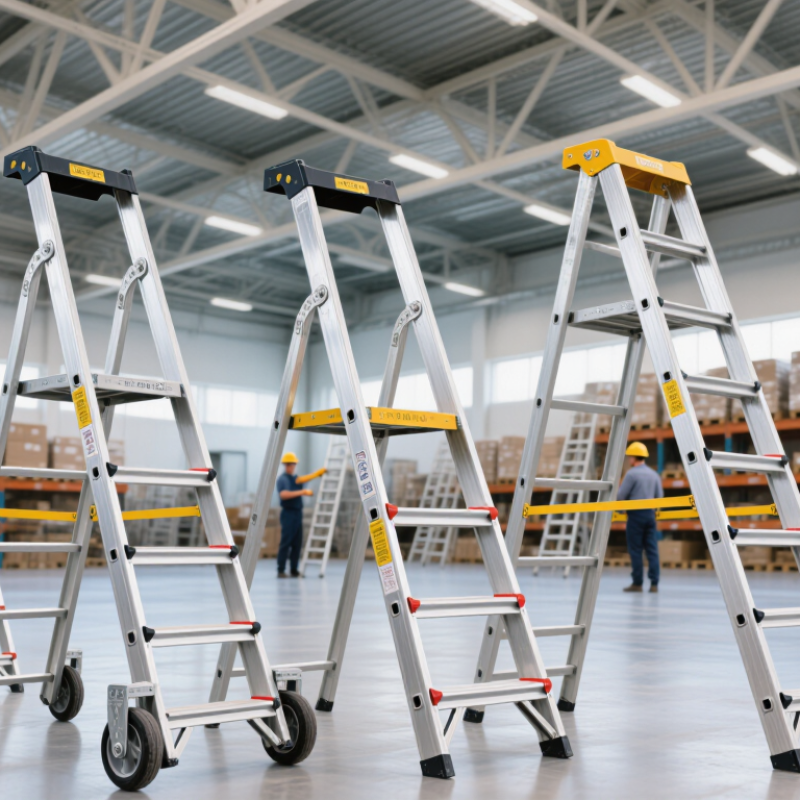
Table of Contents
[Hide]
Types of Warehouse Ladders Manufactured in China
Chinese manufacturers produce several warehouse ladder types for different handling tasks. Mobile platform ladders suit high shelving and include guardrails, wide steps, and lockable casters. Rolling safety ladders help workers reach pallet locations while maintaining a stable standing position. Picking ladders are narrower and easier to move through busy aisles. They often use aluminum or powder-coated steel frames.
Telescopic ladders support maintenance teams because their height adjusts inside compact storage areas. Folding step ladders work well near packing stations and inspection benches. For heavier operations, industrial work platforms provide larger decks and stronger load capacity. Buyers should compare platform height, tread depth, handrail design, wheel brakes, and rated capacity. A low price can hide thin tubing or weak joints. That detail matters.
Tips: Request technical drawings, load test records, material specifications, and a production sample. Confirm whether the ladder matches your destination’s workplace requirements. Check welds, anti-slip surfaces, caster movement, and locking mechanisms during inspection. A supplier may describe a ladder as “heavy duty,” but measurable data is more reliable. Do not judge stability from photographs alone. In practical sourcing, this is an easy mistake. Some buyers also overlook aisle width, creating a ladder that performs well but moves poorly. Safety improves when product design reflects the actual warehouse, not an idealized one.
Key Standards for Evaluating Chinese Ladder Suppliers
China Top Warehouse Ladders Suppliers for Global Buyers
Evaluating Chinese warehouse ladder suppliers requires more than comparing prices. Start with product evidence, factory capability, and documented quality controls. Ask whether the ladder meets relevant standards, such as EN 131 or ANSI-ASC A14, for your target market. Request current test reports, not undated certificates. Confirm the tested model matches the production model.
Inspect load ratings, platform dimensions, step spacing, locking systems, and anti-slip feet. A stable ladder should remain firm on a smooth warehouse floor. Check weld consistency, sharp edges, coating thickness, and corrosion resistance. Request material specifications for aluminum, steel, hinges, and fasteners. Sample testing is essential. One attractive sample cannot represent every shipment.
Factory audits should review incoming material records, worker training, calibration logs, and final inspection procedures. Traceable batch numbers can help identify problems after delivery. Ask how the supplier handles defects, replacement parts, packaging damage, and corrective actions. Export experience also matters, especially for labeling, manuals, pallet protection, and destination requirements.
Be careful with unusually low quotations. They may reflect thinner materials or reduced inspection. No audit is perfect. A supplier may provide convincing documents but struggle with production consistency. Video calls help, yet an independent inspection gives stronger evidence. Buyers should compare several samples and record weaknesses honestly, including minor design concerns that seem unimportant during the first review.
Leading Chinese Warehouse Ladder Supplier Categories
China Top Warehouse Ladders Suppliers for Global Buyers
Leading Chinese Warehouse Ladder Supplier Categories
Chinese warehouse ladder suppliers commonly serve several practical categories. Mobile warehouse ladders support picking tasks across wide aisles. They usually include lockable casters, handrails, and deep, slip-resistant steps. Platform ladders offer a stable standing area for scanning, packing, and inventory work. Their guardrails can improve confidence during longer tasks.
Step ladders suit compact storage zones and frequent short-height access. Rolling picking ladders are useful when workers move between shelves repeatedly. For taller racking systems, suppliers may produce caged access ladders or fixed industrial ladders. These products need careful attention to angle, platform size, and fall protection features. A small design error matters.
Reliable suppliers should explain load ratings clearly. They should provide material details, dimensional drawings, inspection records, and usage guidance. Steel frames may suit demanding warehouse traffic, while aluminum reduces handling weight. Weld quality, tread grip, wheel brakes, and surface treatment deserve physical inspection. Photos are helpful, but samples reveal more.
Customization can include platform height, step spacing, rail shape, and color coding. However, custom work may create delays or inconsistent replacement parts. I would confirm tolerances before approving production. Buyers should also review packaging, delivery protection, and after-sales support. No supplier category is perfect. The safest choice matches the ladder to real work conditions, not only the lowest quotation.
This benchmark compares common warehouse ladder categories by typical platform height and rated user load. Values represent commonly published commercial specifications and should be verified against the exact product model and applicable local safety standards.
Manufacturing Quality and Customization Capabilities
Warehouse ladders for global buyers require more than a strong frame.
Manufacturing quality begins with controlled steel thickness, accurate welding, stable joints, and consistent surface treatment. Each batch should include dimensional checks, load testing, and traceable inspection records.
Small defects matter. A loose caster can become a serious warehouse hazard.
The U.S. Bureau of Labor Statistics recorded 1,283 fatal injuries in transportation and material-moving occupations during 2023. This wider category is not ladder-specific, but it shows why access equipment deserves disciplined evaluation.
OSHA 29 CFR 1910.23 also emphasizes safe ladder design, inspection, and use.
Suppliers should align production with applicable standards, including ANSI A14.7 or EN 131-7 where relevant.
Compliance paperwork alone is not enough.
Customization separates practical suppliers from catalog sellers.
Buyers may request 600-millimeter platforms, 1,500-millimeter working heights, locking casters, reinforced handrails, or corrosion-resistant finishes.
Good suppliers convert these needs into drawings, prototypes, and measurable acceptance criteria.
Packaging also needs attention, especially for long-distance shipping. A damaged guardrail creates hidden costs.
The honest limitation is that customization can increase lead time and inspection complexity.
Buyers should review test methods, material certificates, replacement-part access, and factory audit evidence before ordering. The safest specification is still the one workers can use correctly every day.
Export, Safety, and Procurement Considerations for Global Buyers
China Top Warehouse Ladders Suppliers for Global Buyers?
Export, Safety, and Procurement Considerations for Global Buyers
Buying warehouse ladders from China requires more than comparing unit prices. Global buyers should examine factory experience, production controls, and export capability. A supplier should provide clear drawings, material specifications, load ratings, and inspection records. Ask whether each ladder is tested before packing. Small details matter.
Check the platform width, step spacing, handrail height, locking mechanism, and anti-slip feet. The feet should remain stable on smooth concrete floors. Welds should look even, without sharp edges or visible cracks. Request samples before approving a large order. Use the sample in a realistic warehouse setting. Test it with normal footwear and working loads. It is not enough to inspect photographs.
Export preparation also deserves careful review. Confirm carton dimensions, pallet methods, moisture protection, labels, and spare-part availability. The supplier should support accurate commercial invoices and packing lists. Buyers must verify destination-country safety requirements independently. Local rules can differ. Do not assume one certificate covers every market.
A written quality agreement can define acceptable defects, inspection stages, and replacement terms. Independent pre-shipment inspection adds useful evidence, especially for new suppliers. Yet no checklist is perfect. I would still review recurring complaints after delivery and adjust the specification. A cheaper ladder may become expensive when damaged feet, delayed paperwork, or inconsistent batches interrupt warehouse operations. Reliability is built through repeated checks, not promises.
China Top Warehouse Ladders Suppliers for Global Buyers? - Export, Safety, and Procurement Considerations for Global Buyers
| Warehouse Ladder Type | Typical Working Height | Typical Platform or Step Height | Typical Rated Load | Common Construction | Typical Safety Features | Relevant Standards to Verify | Export and Procurement Checks | Recommended Warehouse Use |
|---|---|---|---|---|---|---|---|---|
| Single-Sided Mobile Picking Ladder | Approximately 1.8–3.6 m | Approximately 0.8–2.6 m | Usually 120–150 kg; confirm the tested rating | Powder-coated steel or aluminum frame with steel or aluminum steps | Handrails, rear support, non-slip steps, locking casters, and a wide base | EN 131 for portable ladders; local occupational-safety requirements in the destination market | Request load-test records, caster-lock specifications, packed dimensions, net/gross weight, and assembly instructions | Order picking, carton retrieval, and medium-height shelving |
| Rolling Warehouse Step Ladder | Approximately 1.5–3.0 m | Approximately 0.6–2.0 m | Commonly 120–150 kg | Steel or aluminum with ribbed or perforated steps | Spring-loaded wheels, anti-slip feet, handrails, and a self-supporting frame | EN 131; ANSI A14.2 may be relevant for portable metal ladders sold in the United States | Check whether wheels retract under load, verify step-slip testing, and confirm corrosion protection for humid storage areas | Frequent short-duration access to shelving and picking locations |
| Two-Sided Warehouse Step Ladder | Approximately 1.5–3.5 m | Approximately 0.7–2.5 m | Typically 120–150 kg per applicable configuration | Aluminum or painted steel with braced side frames | Anti-slip treads, spreader braces, locking hinges, and stabilizing feet | EN 131; verify whether the design is classified for professional use | Confirm open-position locking, hinge durability, folded size, pallet quantity, and carton protection | Access from either side in open warehouse aisles |
| Platform Ladder with Guardrail | Approximately 2.0–4.5 m | Approximately 1.0–3.0 m | Often 150 kg, subject to design and testing | Welded steel or aluminum frame with a standing platform | Full or partial guardrail, toe board, handrails, locking casters, and anti-slip platform | EN 131; OSHA 29 CFR 1910.23 may apply to workplace use in the United States | Check platform dimensions, guardrail height, toe-board provision, brake performance, weld quality, and stability test results | Longer-duration picking, stock counting, and maintenance work |
| Warehouse Access Stair with Handrails | Approximately 2.0–5.0 m | Usually designed with fixed, evenly spaced steps | Commonly 150 kg or higher; project-specific verification is required | Welded steel, aluminum, or galvanized steel structure | Two handrails, anti-slip stair treads, stabilizers, locking wheels, and a large work platform | EN ISO 14122-3 for fixed access stairways; local building and workplace rules must also be checked | Confirm stair angle, tread depth, handrail arrangement, surface treatment, load calculations, and installation drawings | Higher racks, mezzanines, equipment platforms, and semi-permanent access points |
| Telescopic or Folding Access Ladder | Approximately 2.0–4.5 m | Configuration-dependent | Commonly 100–150 kg; verify each operating mode | Anodized aluminum sections with mechanical locking components | Automatic or manual locks, anti-slip feet, stabilizing bars, and transport handles | EN 131 or the applicable national portable-ladder standard | Require locking-cycle testing, section-overlap details, folded dimensions, operating instructions, and warning labels in the destination language | Portable maintenance, vehicle loading areas, and locations with limited storage space |
| Custom Industrial Work Platform | Project-specific; commonly 2.0–6.0 m | Project-specific | Defined by engineering calculations and intended use | Welded carbon steel, stainless steel, or aluminum | Guardrails, toe boards, access gates, anti-slip flooring, stabilizers, and engineered anchoring | EN ISO 14122 series, OSHA requirements, or other destination-market rules as applicable | Request approved drawings, structural calculations, material certificates, weld inspection records, surface-treatment details, and installation procedures | Fixed production lines, conveyor access, mezzanines, and specialized warehouse equipment |
Procurement note: Dimensions, load ratings, materials, and certification requirements vary by design and destination market. Global buyers should request product drawings, test reports, inspection records, labeling samples, packaging specifications, and documentation confirming compliance with the regulations applicable in the country of import.
Related Posts
-
Essential Tips for Choosing the Right Siding Brake?
-
10 Best Pump Jack Scaffolding Suppliers for Global Buyers
-
7 Best Safety Rail Suppliers for Global Buyers?
-

Best Werner Ladders for Global Buyers in 2026?
-

2026 How to Use the Pivit Ladder Tool Effectively for Your Projects?
-
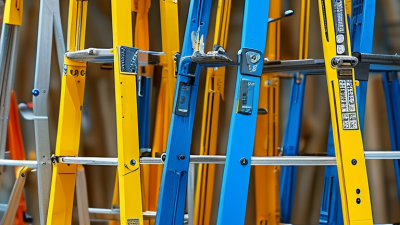
How to Choose the Best Multi Position Ladder for Your Needs?
What Can We Help You With?
CALL NOW TO ORDER
NH: 603-434-6911MA: 508-754-3030ME: Regular weekly deliveries from NH
CALL NOW TO ORDER
NH: 603-434-6911MA: 508-754-3030ME: Regular weekly deliveries from NH












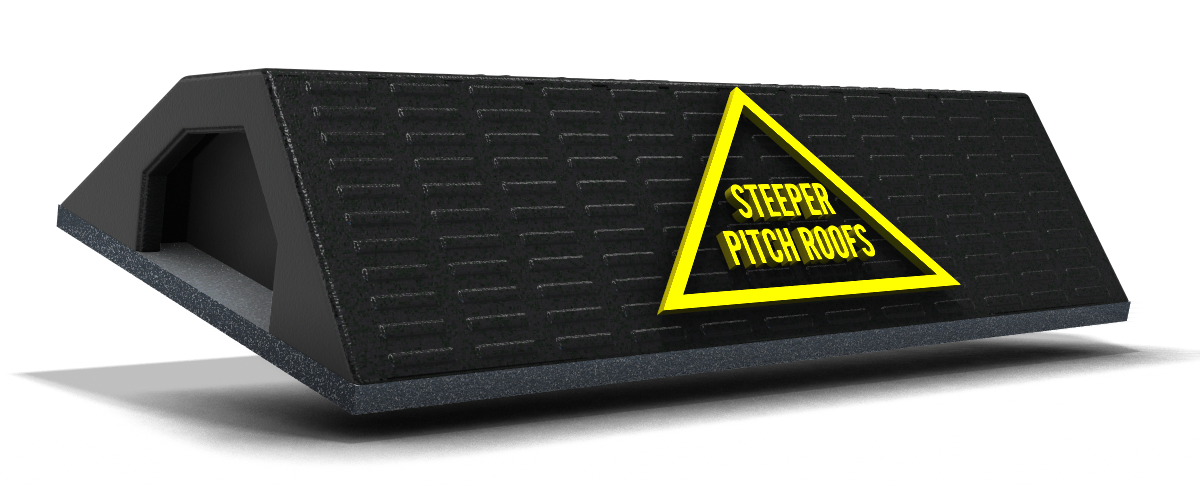
Featured Product

Streamlined. Safe. Flexible.
With the ReechCraft PowerPole, traditional scaffolding and pump jack systems are a thing of the past. Our streamlined design gains you access between buildings, on rooftops, around landscaping, and more. The PowerPole is perfect for contract work on residential areas.
See Products & Accessories
- ReechCraft Power Pole
- ReechCraft 4022465 – 10 in. x 10 in. Base Foot
- ReechCraft Platform Support
- ReechCraft 4022179 – Platform Support with PowerLatch Connector
- ReechCraft PowerLatch Assembly
- ReechCraft 4022084 – PowerPole 12 ft Pole Section
- ReechCraft 4022435 – PowerPole 6 ft Pole Section
- ReechCraft 4028334 – PowerPole Climbing Unit
- ReechCraft 4022096 – PowerPole Coupler
- ReechCraft 4022629 – PowerPole Extendable V-Brace
- ReechCraft 4022791 – PowerPole Outrigger
- ReechCraft 4022432 – PowerPole Standoff Tie
- ReechCraft 4022178 – PowerPole Super Standoff Tie
- ReechCraft 4022629 – PowerPole V-Brace
- ReechCraft 4022756 – Single Man Basket
- ReechCraft 4022071 – SpeedRail Endrail (Two-Pack)
- ReechCraft 4022765 – SpeedRail Midrail Post (Two-Pack)
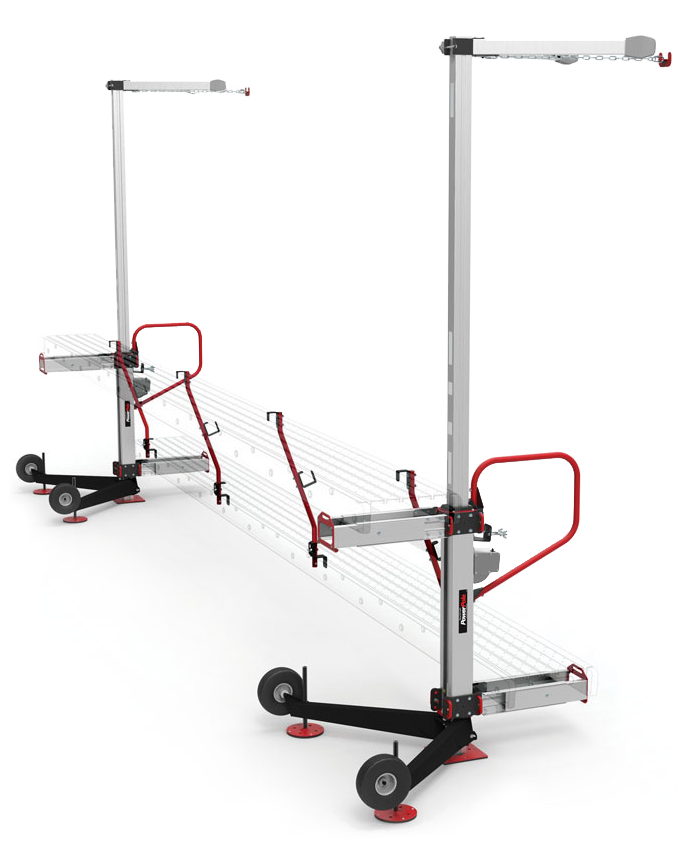

Headache Racks That Turn Heads


See Products & Accessories

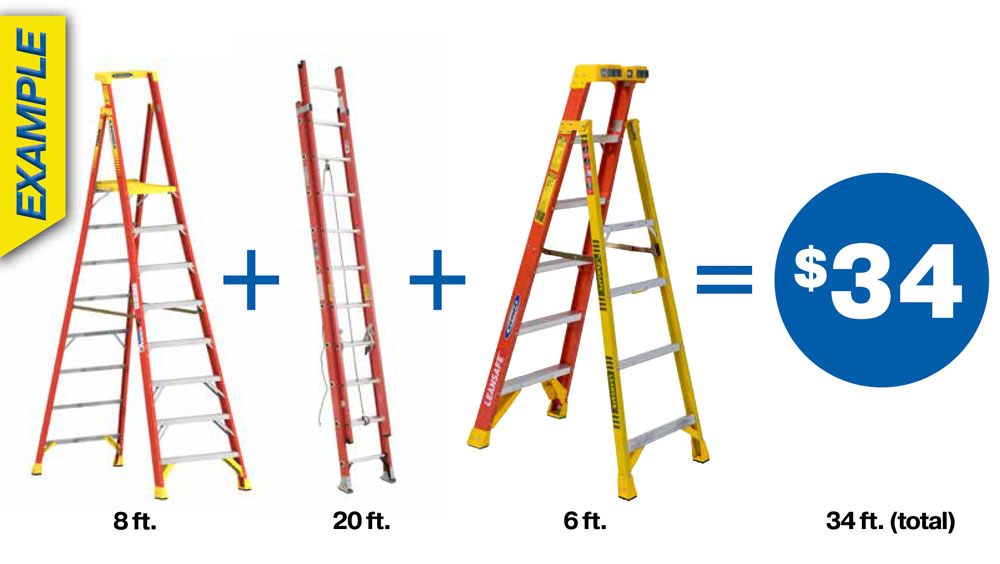
June 2022 - Month Long Promotion
Buy any of the listed Werner ladders and get
$1 Off Per Foot
Demo and Safety Day
Don't miss our WernerCo Sfety and Demo Day BBQ
June 23rd, 2022 from 10am - 2pm
Chance to win giveaways
Cookout from 10am - 2pm
Werner fall protection and Weatherguard Specialists on site to answer any questions and perform safety and product demonstrations.

System One Modular Truck Equipment for New Hampshire, Massachusetts, Connecticut, Rhode Island, Vermont, and Maine Contractors
- Lewiston, ME
- Bar Harbor, ME
- Lexington, MA
- North Andover, MA
- East Hampton, CT
- Meredith, NH
- Concord, NH
- Bennington, VT
- Biddeford, ME
- West Fairlee, VT
- Hopkinton, RI
- Freeport, ME
- Danbury, CT
- Waterboro, ME
- Winslow, ME
- Buxton, ME
- Southington, CT
- Milford, NH
- Pownal, VT
- South Berwick, ME
- North Haven, CT
- Atkinson, NH
- Farmington, NH
- Whitingham, VT
- Pelham, NH
- Essex, VT
- Wallingford, VT
- Laconia, NH
- Narragansett, RI
- Fair Haven, VT
- Sandown, NH
- New London, NH
- Portsmouth, RI
- Haverhill, NH
- Needham, MA
- Bridgewater, MA
- Middletown, RI
- Montpelier, VT
- Barre, VT
- St. Johnsbury, VT
- Livermore Falls, ME
- Sandwich, MA
- Newport, RI
- Raymond, NH
- Tunbridge, VT
- Barnet, VT
- Brooksville, ME
- Gorham, ME
- Litchfield, ME
- Bristol, CT
- Rumford, ME
- Thompson, CT
- Dover, VT
- Westminster, VT
- Waitsfield, VT
- Torrington, CT
- Scituate, RI
- Barnstead, NH
- Lovell, ME
- Barton, VT
- Unity, ME
- Skowhegan, ME
- Groton, CT
- Northfield, VT
- Hopkinton, NH
- Limerick, ME
- Candia, NH
- Berwick, ME
- Killington, VT
- Peacham, VT
- North Hampton, NH
- Randolph, MA
- Bloomfield, CT
- Watertown, MA
- Wilmington, MA
- Methuen, MA
- Nashua, NH
- Plymouth, NH
- Newmarket, NH
- Alfred, ME
- Caribou, ME
- Weymouth, MA
- North Yarmouth, ME
- Bethel, CT
- Rocky Hill, CT
- Bristol, RI
- Sabattus, ME
- Salem, MA
- Londonderry, NH
- Chester, NH
- Westford, VT
- Stamford, CT
- Vershire, VT
- East Hartford, CT
- Norwich, CT
- Stratham, NH
- Windham, NH
- Vernon, CT
Knaack Jobsite Boxes, Chests, Cabinets, Workbenches, Field Offices, and Accessories
- Raymond, ME
- Fairfax, VT
- Presque Isle, ME
- Highgate, VT
- Norridgewock, ME
- Old Saybrook, CT
- Marblehead, MA
- Nashua, NH
- Mashpee, MA
- Auburn, NH
- Bowdoin, ME
- Milford, CT
- Bolton, CT
- Mendon, VT
- Dartmouth, MA
- Portland, CT
- North Haven, CT
- New Gloucester, ME
- Bourne, MA
- New Canaan, CT
- Belmont, NH
- Rutland, VT
- Fitchburg, MA
- Waterbury, CT
- Burlington, VT
- Fair Haven, VT
- Bethel, VT
- Greene, ME
- Chicopee, MA
- New London, CT
- Gloucester, MA
- Mechanic Falls, ME
- Wilmington, MA
- Fairfield, CT
- Methuen, MA
- Newport, ME
- Bakersfield, VT
- Monroe, CT
- Meriden, CT
- Prospect, CT
- Thomaston, ME
- Watertown, MA
- Winchester, ME
- Hampstead, NH
- Gilford, NH
- Pownal, VT
- Essex Junction, VT
- Lincoln, ME
- East Lyme, CT
- Tolland, CT
- Naugatuck, CT
- Dennis, MA
- Waldoboro, ME
- Derry, NH
- Bridgewater, MA
- Windham, NH
- Longmeadow, MA
- West Rutland, VT
- Warren, ME
- Coventry, RI
- Whitingham, VT
- Bow, NH
- Norway, ME
- Smithfield, RI
- Sharon, VT
- Amherst, MA
- Wells, ME
- Sabattus, ME
- Stoughton, MA
- Thetford, VT
- Tewksbury, MA
- Norwich, CT
- Rochester, VT
- Gray, ME
- Madison, ME
- Leominster, MA
- Newington, CT
- Sutton, VT
- Shelton, CT
- East Hampton, CT
- Darien, CT
- Haverhill, NH
- Houlton, ME
- Foster, RI
- Medford, MA
- Littleton, NH
- Seymour, CT
- Harrisville, RI
- Killingworth, CT
- Bellows Falls, VT
- Lunenburg, VT
- Saco, ME
- Peterborough, NH
- Frankfort, ME
- Albany, VT
- Plainville, CT
- North Kingstown, RI
Thule TracRac from the Thule TracRac Resellers New England Trusts
- South Windsor, CT
- Melrose, MA
- Manchester, CT
- Limerick, ME
- Glocester, RI
- South Portland, ME
- Brookline, NH
- Killingworth, CT
- Thompson, CT
- Groton, CT
- Montgomery, VT
- Mendon, VT
- Derby, VT
- Newington, CT
- Somersworth, NH
- West Haven, CT
- Merrimack, NH
- Bellows Falls, VT
- South Berwick, ME
- Gorham, ME
- Marblehead, MA
- Hudson, MA
- Alton, NH
- Jericho, VT
- Simsbury, CT
- Skowhegan, ME
- Plaistow, NH
- North Andover, MA
- Camden, ME
- Brookfield, CT
- Vergennes, VT
- Pittsfield, ME
- Hartford, VT
- Sanford, ME
- Swanzey, NH
- Kingston, NH
- Alfred, ME
- Needham, MA
- West Springfield, MA
- Underhill, VT
- Middletown, CT
- Amherst, NH
- Sidney, ME
- Natick, MA
- South Kingstown, RI
- Vershire, VT
- Richmond, ME
- Quincy, MA
- Bolton, CT
- Hallowell, ME
- West Hartford, CT
- Wardsboro, VT
- Avon, CT
- Bridgeport, CT
- Sudbury, MA
- Waltham, MA
- Marion, MA
- Waterbury, CT
- Southbury, CT
- Vernon, CT
- Warwick, RI
- Pembroke, NH
- Leominster, MA
- Torrington, CT
- Weare, NH
- Barrington, NH
- New Bedford, MA
- Charlestown, RI
- Jefferson, ME
- Pittsfield, MA
- Newport, NH
- Madison, ME
- Providence, RI
- Brookline, MA
- South Hadley, MA
- Barnstead, NH
- Peabody, MA
- Madison, CT
- Raymond, ME
- Barre, VT
- Augusta, ME
- Belmont, MA
- Ellington, CT
- Cambridge, MA
- Claremont, NH
- Falmouth, MA
- North Yarmouth, ME
- Norridgewock, ME
- Ipswich, MA
- East Providence, RI
- Johnston, RI
- Bedford, NH
- Scituate, RI
- Huntington, VT
- Seabrook, NH
- Danville, VT
- Clinton, CT
- Eliot, ME
Purchase Alum-A-Pole Products from Nation Wide Ladder – Ladder Distributors in MA, NH, CT, ME, VT, and RI
- Providence
- Cranston
- Warwick
- Pawtucket
- East Providence
- Woonsocket
- Newport
- Central Falls
- Manville
- Harrisville
- Burlington
- Barre
- South Burlington
- Rutland
- Essex Junction
- St Albans
- Montpelier
- Winooski
- Bellows Falls
- Newport
Purchase 28 Ft Extension Ladders from Nation Wide Ladder – Ladder Distributors in MA, NH, CT, ME, VT, and RI
- Providence
- Cranston
- Warwick
- Pawtucket
- East Providence
- Woonsocket
- Newport
- Central Falls
- Manville
- Harrisville
- Burlington
- Barre
- South Burlington
- Rutland
- Essex Junction
- St Albans
- Montpelier
- Winooski
- Bellows Falls
- Newport
Purchase 40 Ft Extension Ladders from Nation Wide Ladder – Ladder Distributors in MA, NH, CT, ME, VT, and RI
- Providence
- Cranston
- Warwick
- Pawtucket
- East Providence
- Woonsocket
- Newport
- Central Falls
- Manville
- Harrisville
- Burlington
- Barre
- South Burlington
- Rutland
- Essex Junction
- St Albans
- Montpelier
- Winooski
- Bellows Falls
- Newport
Purchase 28 Ft Fiberglass Extension Ladders from Nation Wide Ladder – Ladder Distributors in MA, NH, CT, ME, VT, and RI
- Providence
- Cranston
- Warwick
- Pawtucket
- East Providence
- Woonsocket
- Newport
- Central Falls
- Manville
- Harrisville
- Burlington
- Barre
- South Burlington
- Rutland
- Essex Junction
- St Albans
- Montpelier
- Winooski
- Bellows Falls
- Newport