Let Nationwide Ladder & Equipment Help You Find What You Need.

Top Ladder Leveler Types for Global Buyers

Choosing the right ladder leveler can influence stability, setup time, and worker confidence across different job sites. Global buyers often compare adjustable foot levelers, telescoping levelers, and wide-base stabilizing systems. Each type solves a different problem.

An adjustable foot ladder leveler suits uneven floors, stairs, and sloped outdoor surfaces. Telescoping designs offer faster height adjustment, while stabilizer bars can improve contact with walls or delicate surfaces. A practical evaluation should examine load capacity, locking mechanisms, corrosion resistance, and compatibility with the ladder model. Small details matter. A clear locking indicator is easier to inspect than a hidden spring. A textured rubber pad can reduce movement on dusty concrete.

Field experience shows that product descriptions do not always reveal installation difficulties. A two-millimeter fitting error may create unwanted play. That detail deserves attention. Buyers should request dimensional drawings, material specifications, testing records, and replacement-part information before placing large orders. Independent testing and traceable quality controls can strengthen supplier credibility, but certificates still require careful verification for the destination market.

No single ladder leveler works everywhere. Climate, transport conditions, maintenance skills, and local workplace practices can change the best choice. Some buyers may prioritize low weight and compact packaging. Others may need rugged components for repeated industrial use. This guide compares common ladder leveler types through practical features, limitations, and purchasing considerations. The comparison is useful, but not perfect. Real-world trials remain valuable.
Top Ladder Leveler Types for Global Buyers

What Ladder Levelers Are and Why Global Buyers Need Them

Top Ladder Leveler Types for Global Buyers

Ladder levelers are adjustable devices fitted to a ladder’s feet. They compensate for uneven ground, steps, sloped floors, and minor height differences. This simple function improves contact with the surface. It also reduces rocking during climbing, painting, inspection, or maintenance work.

They are not a replacement for safe ladder setup. OSHA identifies falls from portable ladders as a major source of occupational injuries and fatalities. CDC and NIOSH research has also linked ladders to about 20% of occupational fall injuries. Among construction workers, the figure reaches approximately 81% of fall injuries. These figures explain why levelers deserve more attention from global buyers.

Common types include telescoping foot levelers, hinged levelers, and wide-base stabilizing systems. Telescoping models suit uneven outdoor surfaces and allow precise adjustment. Hinged designs work well where ladder movement requires flexible foot contact. Wide-base systems provide extra lateral support, but they may increase transport weight. Buyers should check load ratings, locking mechanisms, corrosion resistance, replacement parts, and compatibility with the ladder profile. Applicable requirements may include EN 131 or relevant ANSI ladder standards.

Field experience shows a practical weakness. A strong leveler cannot correct a damaged ladder, loose rung, or slippery surface. Specifications can also look impressive while hiding difficult adjustment. Buyers should request independent test evidence and inspect samples on real surfaces. A short site trial often reveals more than a polished catalog.

Top Ladder Leveler Types for Global Buyers

What Ladder Levelers Are and Why Global Buyers Need Them

Ladder levelers are adjustable feet or leg systems that help compensate for uneven ground and improve ladder stability. The chart compares common leveler types by their typical maximum leveling correction.

Values are representative industry ranges in inches; actual adjustment capacity depends on ladder design, load rating, installation method, and applicable safety standards.

Main Types of Ladder Levelers by Design and Adjustment Method

Top Ladder Leveler Types for Global Buyers

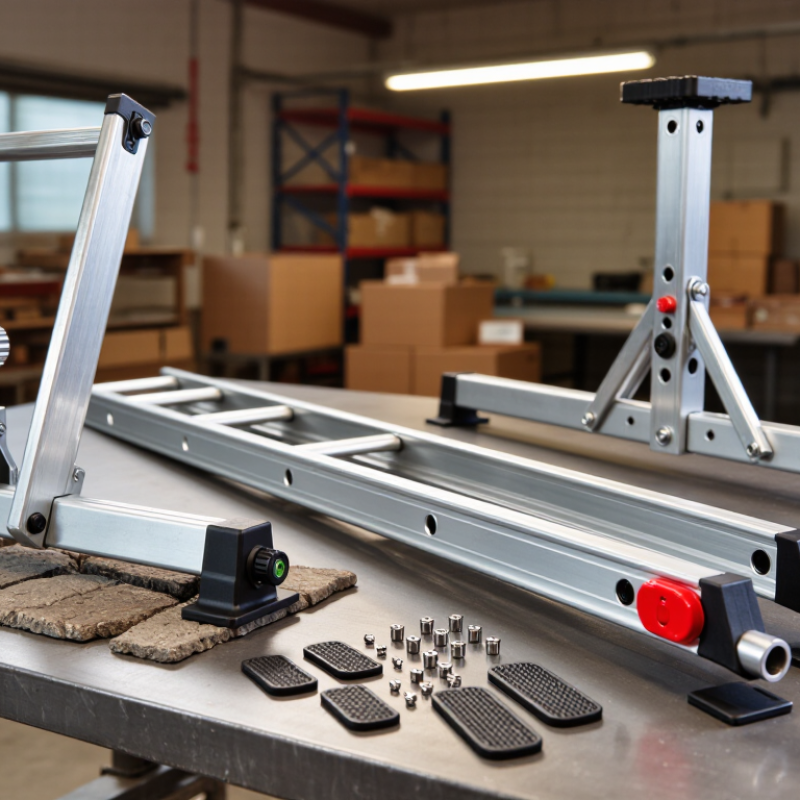
Ladder levelers differ mainly by design and adjustment method. Fixed foot levelers use a broad, stable base beneath each ladder rail. They suit uneven floors with minor height differences. Pivoting levelers follow sloped surfaces and keep both feet engaged. They are useful on stairs, paving, and construction platforms. Telescoping models adjust through locking holes or threaded mechanisms. Their range is greater, but loose pins can create serious risks.

A 2021 NIOSH analysis reported that ladders were involved in 43% of fatal falls in U.S. construction. This figure supports careful leveler selection, not automatic confidence. OSHA 1910.23 requires ladders to remain stable and free from displacement. Buyers should check rated load, locking visibility, foot material, and rail compatibility. EN 131 requirements may also matter for European supply chains.

Adjustment speed matters on busy sites. Threaded levelers offer precise correction, but mud can reduce smooth movement. Ratchet systems work faster and provide clear incremental settings. Pivoting designs can improve contact, yet they may feel less familiar during installation. A common mistake is choosing maximum adjustment range over actual stability. Field inspections often find worn rubber feet before damaged metal parts. That small detail deserves more attention. A leveler cannot correct a weak ladder, poor setup, or unsuitable ground.

How Each Ladder Leveler Type Performs on Different Surfaces

Top Ladder Leveler Types for Global Buyers

How Each Ladder Leveler Type Performs on Different Surfaces

Adjustable leg levelers suit uneven concrete, paving stones, and warehouse floors. Each leg can compensate for small height differences. Swivel feet improve contact when the ground slopes slightly. However, they cannot correct severe settlement or loose gravel. OSHA’s Ladder Safety guidance links ladder falls to about 100 annual fatalities and 58,000 medically treated injuries in the United States. Surface selection deserves serious attention.

Wide-base stabilizers perform well on firm, flat concrete and finished floors. Their broader footprint reduces side movement during light work. They are less effective on wet tiles unless the feet provide tested slip resistance. Telescoping levelers offer better adjustment on steps and split-level surfaces. Locking pins must engage fully. A partly locked mechanism is a hidden failure point.

For soil, grass, or compacted construction ground, choose levelers with large, self-aligning feet. Small feet can sink quickly. HSE’s Work-related fatal injuries in Great Britain, 2023/24 report identifies falls from height as a leading workplace danger. Levelers reduce imbalance, but they do not replace a stable base, correct ladder angle, or three-point contact. One assumption needs challenge: “adjustable” does not always mean safer. Field checks should include surface moisture, foot wear, load rating, and movement under weight. The best type depends on the surface, not the product label.

Top Ladder Leveler Types for Global Buyers - How Each Ladder Leveler Type Performs on Different Surfaces
Ladder Leveler Type Adjustment Method Typical Adjustment Range Smooth Concrete Rough Concrete Asphalt Tile and Finished Floors Soil and Gravel Sloped or Uneven Ground Main Strength Main Limitation Best Purchasing Priority
Swivel-Foot Leveler Pivoting foot follows the angle of the ground while the ladder rail remains more upright. Approximately 50–150 mm, depending on the model and rail design. 5/5 5/5 4/5 4/5 3/5 5/5 Maintains a broad contact angle on uneven or sloping surfaces. Joint and foot-pad wear can reduce stability if maintenance is neglected. Pivot strength, locking method, anti-slip pad compound, and rated load.
Screw-Adjustable Leveler Threaded spindle is turned to raise or lower one ladder side with fine control. Approximately 75–300 mm, depending on thread length and construction. 5/5 5/5 4/5 4/5 3/5 5/5 Provides precise height adjustment for different floor levels. Adjustment is slower, and exposed threads require protection from dirt and corrosion. Thread quality, locking nut, corrosion resistance, and ease of operation.
Telescoping or Ratchet Leg Leveler Inner leg extends through holes, pins, or a ratcheting mechanism for stepwise adjustment. Approximately 100–300 mm, with adjustment usually available in fixed increments. 5/5 5/5 4/5 4/5 3/5 5/5 Fast adjustment across a relatively large height difference. Pin or ratchet engagement must be fully secured before climbing. Positive locking, visible engagement indicators, leg stiffness, and corrosion protection.
Wide-Base Leveler Uses a broad foot, plate, or shoe to distribute the ladder load over a larger area. Usually limited to approximately 25–100 mm of height adjustment. 5/5 5/5 4/5 4/5 4/5 3/5 Reduces sinking and improves load distribution on softer surfaces. Provides less correction for steep height differences and may be bulkier to transport. Base area, pad tread, ground pressure, folded dimensions, and total ladder weight.
Pivoting Anti-Slip Foot Self-aligning rubber or elastomer foot tilts slightly to keep the pad in contact with the floor. Usually less than 50 mm; primarily compensates for small irregularities. 5/5 4/5 4/5 5/5 2/5 3/5 Offers good traction and continuous contact on clean, firm floors. It is not a substitute for a true height-adjustable leveler on significantly uneven ground. Rubber hardness, tread pattern, replacement availability, and compatibility with the ladder rail.
Leveler with Ground Spike or Soft-Ground Shoe Uses a pointed or enlarged ground-contact component to improve penetration or load distribution. Usually less than 100 mm; some designs combine it with a short adjustable leg. 2/5 3/5 3/5 1/5 5/5 4/5 Improves resistance to sliding or sinking on suitable outdoor ground. Can damage finished floors and may be unstable on loose or highly irregular material. Interchangeable foot options, ground compatibility, corrosion resistance, and safe storage.
Performance ratings are indicative comparisons for common operating conditions. Actual results depend on ladder design, user load, surface contamination, foot-pad material, adjustment range, locking engagement, and compliance with the applicable local ladder-safety standard. A leveler should be used only as instructed by the ladder manufacturer.

Key Buying Factors: Compatibility, Load Capacity, Safety, and Standards

Top Ladder Leveler Types for Global Buyers

Key Buying Factors: Compatibility, Load Capacity, Safety, and Standards

Ladder levelers help stabilize ladders on uneven floors, steps, and rough outdoor surfaces. Common types include adjustable foot levelers, telescopic leg systems, and pivoting base units. Compatibility must be checked carefully. Measure the ladder rail width, mounting holes, and lower-section profile before ordering. A leveler that fits one ladder may not fit another, even when both appear similar.

Load capacity is more than the worker’s body weight. Include tools, materials, and movement during climbing. For example, a 90-kilogram user carrying a 15-kilogram toolbox needs additional capacity. Check whether the rating applies to one leveler or the complete ladder system. This detail is often missed. It can create a misleading sense of safety.

Safety depends on locking pins, anti-slip feet, secure fasteners, and controlled adjustment. Test the unit on the actual surface, not only on a warehouse floor. Look for unwanted movement, rail twisting, or uneven contact. Standards vary by destination, ladder type, and workplace use. Request current test reports, material information, and installation instructions from the supplier. Local requirements may differ from international guidance, so buyers should verify them with a qualified safety professional. A perfect specification sheet is not enough. Real installation conditions still matter.

How to Select the Right Ladder Leveler for Your Market and Application

Top Ladder Leveler Types for Global Buyers

How to Select the Right Ladder Leveler for Your Market and Application

Choosing a ladder leveler starts with the working surface, not the product catalog. Concrete floors may suit fixed or swivel feet, while uneven soil often requires independently adjustable legs. For sloped roofs, a leveling system with positive locking positions can improve stability during setup. Measure twice. Do not guess.

Check the ladder’s load rating, width, and center of gravity before selecting a leveler. A narrow extension ladder may need compact feet that avoid side contact. A wide stepladder may perform better with a broader base and high-friction pads.

In coastal or humid markets, corrosion-resistant metal and sealed adjustment parts deserve close attention. Small details matter.

Application also affects transport and training. A construction crew may prefer quick-release mechanisms, while warehouse teams may value simple, tool-free adjustments. Test the leveler with the actual ladder on representative surfaces, including wet concrete or dusty flooring. In field evaluations, users sometimes tighten locks unevenly, which creates avoidable instability. Clear markings and tactile controls can reduce that risk.

Market requirements can differ. Review local safety standards, packaging expectations, replacement-part access, and installer skill levels before ordering. A technically strong leveler may still fail commercially if spare parts arrive slowly or instructions use unclear language.

No selection method is perfect. Record test results, user feedback, and setup errors before committing to a large purchase.

TOP
Nation Wide Ladder

Nation Wide Ladder