Warehouse ladders play a crucial role in modern storage and logistics. They facilitate safe access to high shelves and storage areas in warehouses. These ladders come in various designs and sizes, catering to different operational needs. Understanding how these essential tools work can enhance warehouse safety and efficiency.
When choosing warehouse ladders, consider their weight capacity and durability. A sturdy ladder can minimize accidents and improve productivity. Not all ladders are created equal. Some may lack stability, leading to safety risks. It's vital to select a reliable ladder that meets industry standards.
The unique features of warehouse ladders contribute to their versatility. Many include wheels for easy movement or safety features like handrails. These elements ensure employees can work effectively while reducing potential hazards. Regular inspections and maintenance of warehouse ladders are important. This helps avoid malfunctions and ensures a safer working environment for everyone.
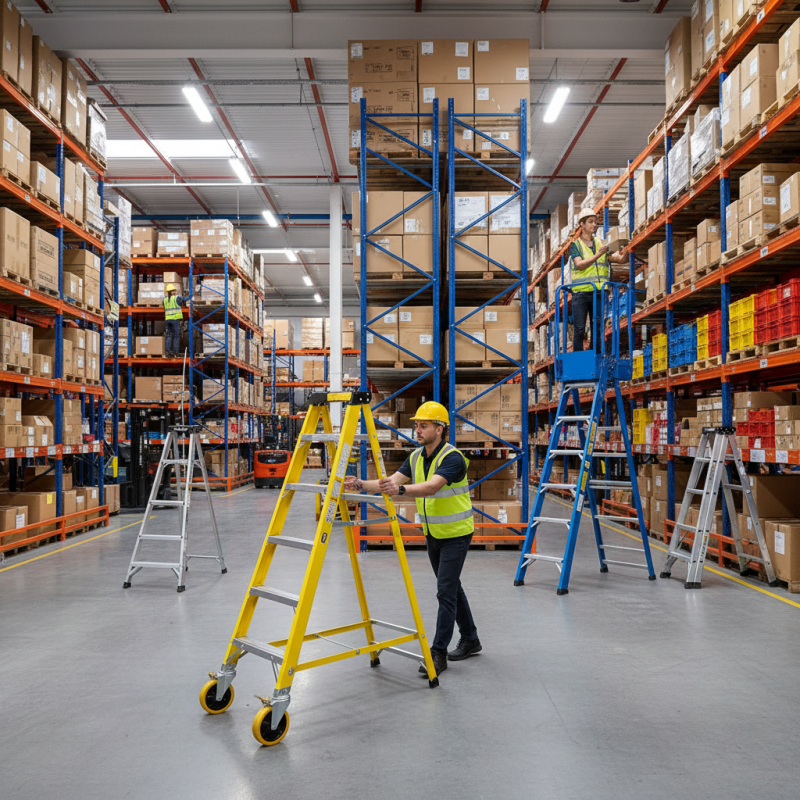
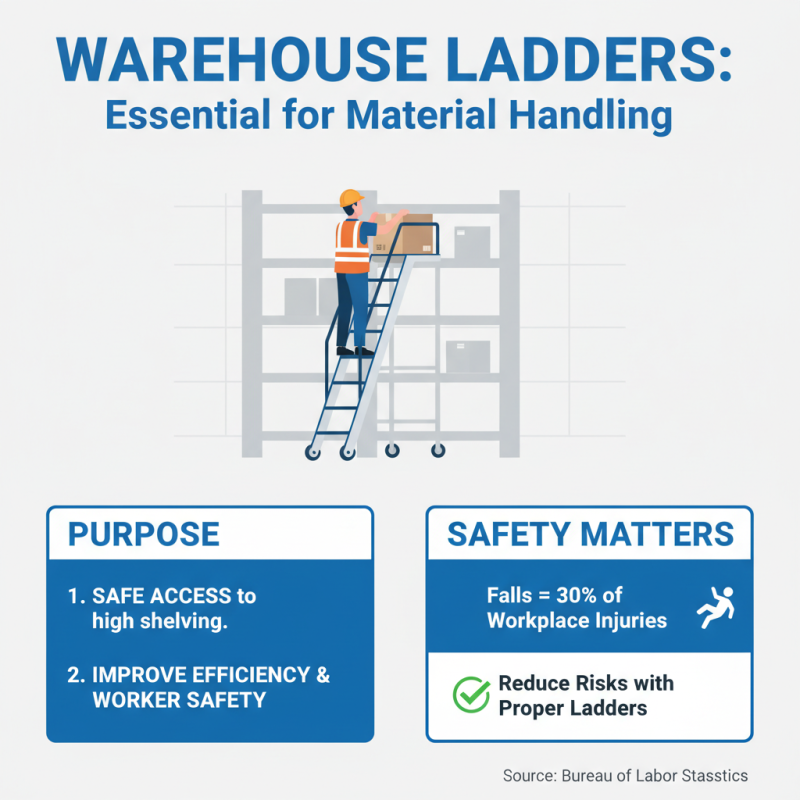
Warehouse ladders are essential tools designed for safe access to high shelving or storage areas. Their primary purpose in material handling is to improve efficiency and worker safety. According to a report from the Bureau of Labor Statistics, falls account for nearly 30% of workplace injuries. Using appropriate ladders significantly reduces these risks.
Material handling systems increasingly incorporate warehouse ladders to optimize space usage. A well-designed ladder can enhance productivity by allowing workers to retrieve items quickly. Studies show that efficient access to inventory can boost workflow by up to 25%. However, not all ladders are created equal. Choosing the right ladder type and ensuring proper maintenance are critical. Neglecting these factors can lead to accidents or hinder performance.
Height and load capacity are key considerations in selecting a warehouse ladder. Workers often overlook these aspects, thinking any ladder will do. As a result, 15% of workplace injuries stem from using unsuitable equipment. Training staff on ladder safety and proper techniques is crucial. Regular safety audits can help identify potential hazards. With growing demands in warehousing, a focus on safe practices is more important than ever.
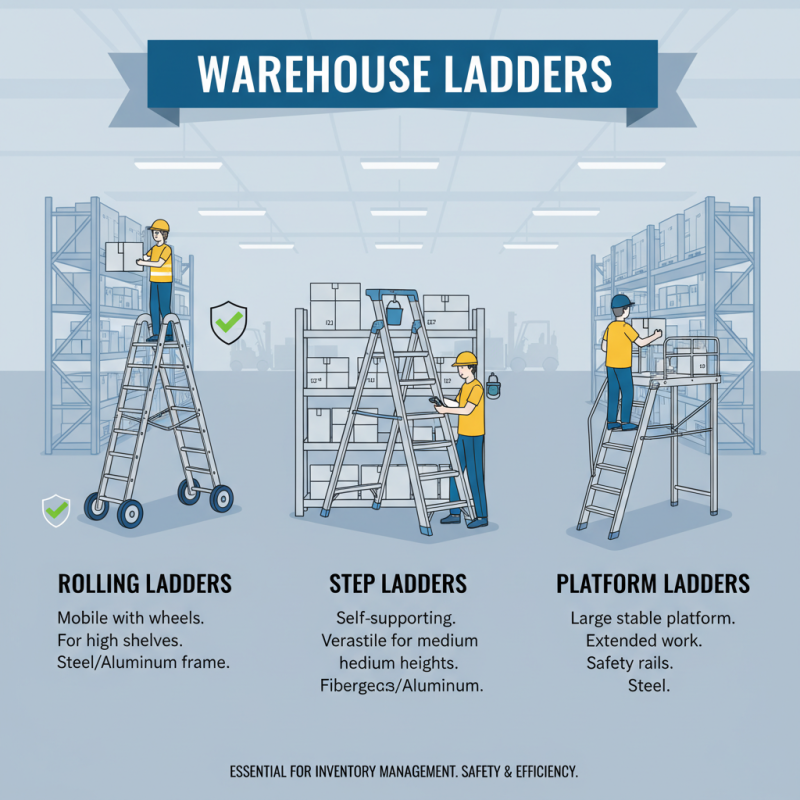
Warehouse ladders are essential tools in distribution centers, ensuring safety and efficiency during inventory management. Different types of warehouse ladders cater to specific needs. Rolling ladders, for instance, are mobile and easy to maneuver. They have wheels that allow for seamless movement, making them ideal for reaching high shelves. Steel or aluminum frames provide durability, capable of withstanding heavy loads.
Step ladders are another common choice. They are stable and typically have a foldable design. This space-saving feature is particularly useful in smaller warehouses. Some step ladders come with added safety features, such as handrails and larger steps. These ensure workers can climb safely while accessing items.
Interestingly, some distribution centers employ custom-built ladders. These unique solutions help meet specific storage requirements. While innovative, they may not always adhere to universal safety standards, leading to potential risks. Employees should receive proper training when using these specialized ladders, as neglecting safety protocols can have serious consequences. Investing in a variety of ladder types is essential, but safety must always come first.
Warehouse ladders are crucial for efficient operations in storage spaces. Understanding key specifications and safety standards is essential for their effective use. Typically, these ladders feature a durable construction, often made from steel or aluminum, ensuring stability and longevity. Heights can vary, with some reaching up to 20 feet. The dimensions should also accommodate the specific needs of the warehouse environment.
Safety standards are paramount when selecting a warehouse ladder. It’s vital to check the load capacity, which usually ranges from 300 to 1,000 pounds. This ensures that the ladder can support the necessary weight during use. Look for ladders with slip-resistant steps and rubberized feet. These features significantly minimize the risk of accidents. Regular inspections should be mandated to ensure ongoing safety and compliance with regulations.
Even with attention to specifications, human error can lead to risks. Workers may neglect to inspect the ladder before use. This oversight can result in serious injuries. Encouraging a safety-first culture is essential. Training staff on proper ladder use is just as important. Making safety a priority ultimately enhances productivity in any warehouse setting.
Warehouse ladders play a crucial role in supply chain operations. They provide easy access to high storage areas, improving efficiency and productivity. These ladders are designed to be safe and sturdy, allowing workers to reach goods without strain. Using warehouse ladders can reduce the risk of accidents associated with climbing makeshift solutions.
Tips for selecting the right warehouse ladder include considering the height needed and the weight capacity. Choosing a ladder that matches the specific tasks in your warehouse is essential. Ensure that it complies with safety standards. Regular maintenance checks can help avoid unexpected failures during use.
The advantages of warehouse ladders extend beyond safety. They optimize space utilization, allowing for more inventory storage. With organized shelving, employees can quickly locate items and minimize downtime. However, it’s important to train workers on proper ladder use to mitigate risks. Assessing your workflow can reveal if ladder integration is beneficial or if other solutions are needed.
Warehouse ladders are essential for safe and efficient operations.
Proper maintenance can extend their lifespan significantly.
Regular inspections should be a priority. Look for rust, loose screws, or worn parts.
These issues can compromise safety.
Tips: Always clean ladders after use. Dirt and debris can cause wear over time.
Keep them stored in a dry place. Excess moisture can lead to corrosion.
Additionally, ensure that the wheels and casters are functional.
Test for smooth movement before each use.
Unstable ladders can be dangerous.
Regularly lubricate moving parts. This simple step can prevent malfunction.
Ultimately, staying proactive with maintenance is crucial.
It helps avoid accidents and costly replacements.
Small actions today can make a big difference for tomorrow.

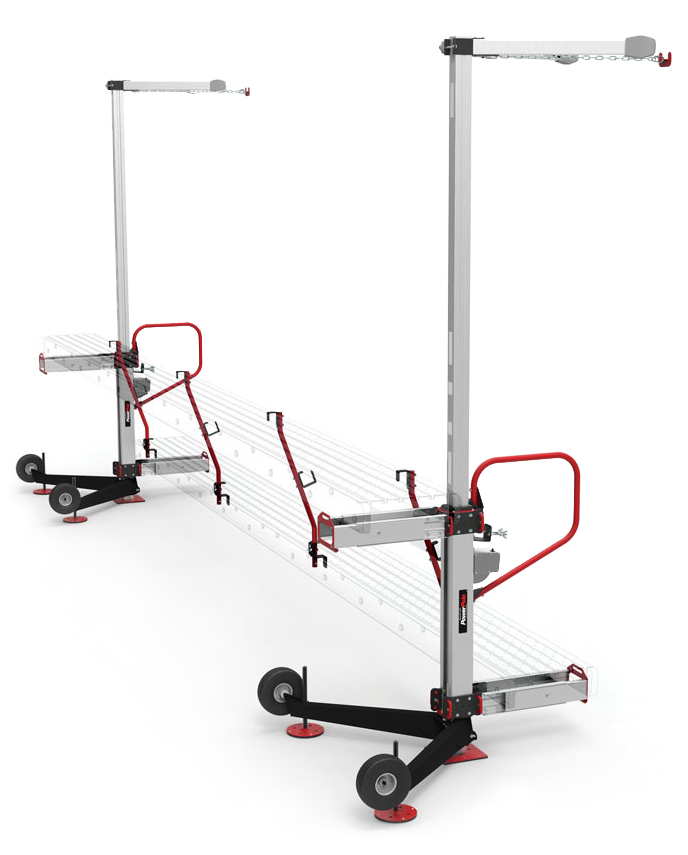
With the ReechCraft PowerPole, traditional scaffolding and pump jack systems are a thing of the past. Our streamlined design gains you access between buildings, on rooftops, around landscaping, and more. The PowerPole is perfect for contract work on residential areas.

Don't miss our WernerCo Sfety and Demo Day BBQ
June 23rd, 2022 from 10am - 2pm
Chance to win giveaways
Cookout from 10am - 2pm
Werner fall protection and Weatherguard Specialists on site to answer any questions and perform safety and product demonstrations.