Let Nationwide Ladder & Equipment Help You Find What You Need.

What Are the Best Safety Ladders From China?

Choosing the best safety ladders from China requires more than comparing prices or polished product photos. A ladder may look strong in a catalog yet flex under uneven weight. Real quality appears in materials, joint design, testing records, and factory consistency. That distinction matters because ladder failures often involve ordinary actions, such as standing too high, placing feet on wet flooring, or opening a hinge incorrectly.

Industry research shows why this market deserves careful attention. Grand View Research’s ladder market analysis identifies rising demand for lightweight aluminum and fiberglass products, especially in construction, warehousing, and home maintenance. Fortune Business Insights also reports continued growth in the global ladder market, driven by infrastructure work and professional access equipment. These reports describe market direction, not proof of one supplier’s quality. That is an important limitation.

Reliable safety ladders should match recognized requirements, including EN 131, ANSI A14 standards, or relevant national specifications. Buyers should request current test reports, load ratings, traceability records, and evidence of production inspections. ISO 9001 certification can support confidence in factory processes, but it does not automatically guarantee a safe ladder. Small details matter. Look for wide feet, secure locking bars, anti-slip steps, smooth welds, and clear warning labels.

The strongest Chinese manufacturers usually combine engineering control with practical experience. Some specialize in household folding ladders. Others produce heavy-duty fiberglass models for electrical work. Neither category is universally best. My own assessment would remain cautious, because supplier claims can be incomplete and online samples may not represent mass production. The right choice depends on working height, user weight, environment, storage, and inspection discipline. Price should come later. Safety evidence should come first.
What Are the Best Safety Ladders From China?

Types of Safety Ladders Manufactured in China

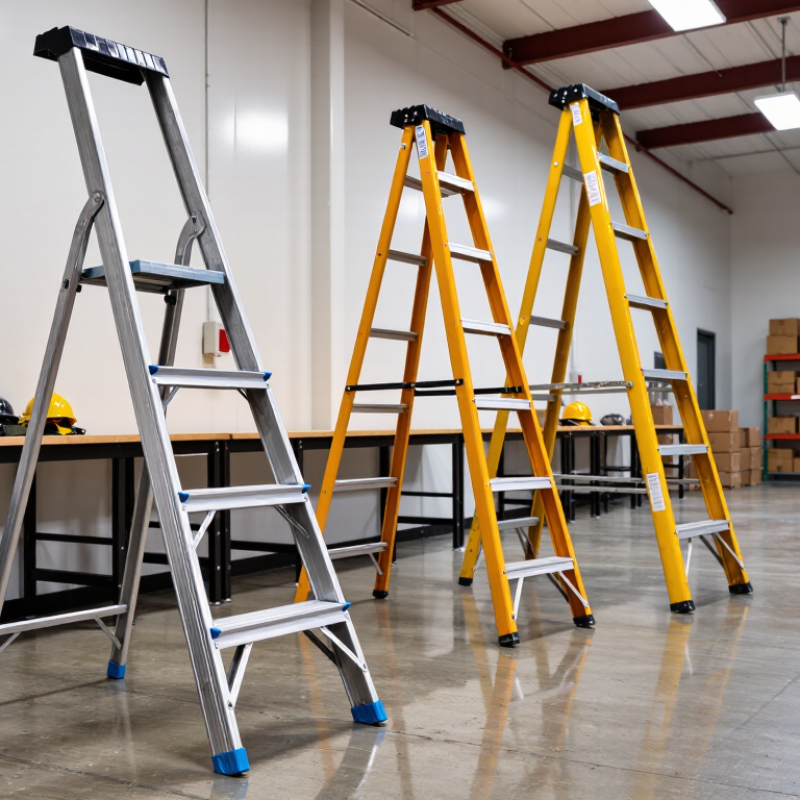
Chinese manufacturers produce several safety-ladder types for construction, warehouses, utilities, and home maintenance. Step ladders offer stable access for short tasks, especially with wide steps and a top handrail. Platform ladders provide a larger standing surface for longer work. Extension ladders suit elevated outdoor tasks, while telescoping models save storage space. Rolling warehouse ladders add guardrails, locking casters, and broad platforms. Fiberglass versions reduce electrical-conductivity risks, while aluminum models remain lighter and easier to transport. Material matters.

Selection should reflect actual working conditions, not only catalog photographs. The U.S. Bureau of Labor Statistics recorded 865 fatal occupational injuries from falls, slips, and trips in 2022. A CDC/NIOSH review also identified ladders as a major contributor to workplace fall injuries. These figures make handrails, anti-slip feet, locking mechanisms, and weight ratings practical priorities. Small details matter. A narrow step can become painful after repeated use.

For Chinese-made ladders, buyers should request load testing, dimensional inspection, and corrosion-resistance records. Relevant benchmarks may include EN 131, ANSI A14.2, or ANSI A14.5, depending on the target market and ladder material. Compliance claims still require verification. I would inspect hinge movement, rung spacing, weld consistency, and platform flex before approval. Factories sometimes present excellent samples, yet production batches can vary. That is an uncomfortable weakness. Third-party inspection and batch sampling remain worthwhile, especially for extension and rolling ladders used repeatedly.

Key Safety Standards for Chinese Ladder Products

What Are the Best Safety Ladders From China?

Choosing a Chinese safety ladder starts with standards, not appearance. For European markets, check compliance with the current EN 131 requirements. For North America, relevant ANSI A14 standards may apply. Australian buyers should review AS/NZS 1892 requirements. These standards cover stability, strength, dimensions, steps, labels, and testing methods. Always confirm the correct standard for the destination market.

A reliable product should include traceable test reports, clear load ratings, and durable warning labels. Inspect the locking hinges, feet, platform, and rivets. A ladder should stand firmly on a clean, level floor. During factory checks, I look for smooth joints and consistent welds. Small manufacturing details matter. However, a certificate alone is not enough. Documents can become outdated, and visual inspection may miss internal weaknesses. Ask for the latest report, sample testing, and production quality records.

Tips: Confirm the ladder’s duty rating before purchase. Test the spreader locks several times. Check that rubber feet remain attached under pressure. Keep the user’s height and working environment in mind. A compact ladder may suit a home, but not a warehouse. I once underestimated storage conditions; damp air affected metal hardware faster than expected. That mistake reinforced one point: safety depends on both product quality and correct use.

Materials, Design Features, and Stability Factors

What Are the Best Safety Ladders From China? Materials, Design Features, and Stability Factors

A reliable safety ladder starts with material selection. High-strength aluminum keeps the frame light, while reinforced fiberglass resists electrical conductivity and outdoor weathering. Steel offers excellent rigidity, but its weight can make handling difficult. In my inspections, poorly finished welds and sharp edges often reveal weak quality control. The U.S. Consumer Product Safety Commission’s 2021 NEISS estimates recorded about 161,000 ladder-related emergency department injuries. Material quality is not a cosmetic issue.

Design details affect daily stability. Look for wide, slip-resistant steps, reinforced hinges, and feet made from oil-resistant rubber. A locking spreader should engage clearly and resist accidental folding. Extension models need secure rung locks and visible overlap markings. The National Institute for Occupational Safety and Health has reported roughly 500,000 ladder-related injuries requiring medical treatment annually. Small design failures can become serious quickly.

Base width matters. So does the floor.

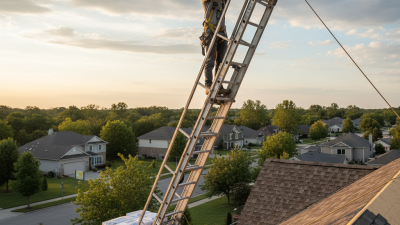
For leaning ladders, OSHA guidance recommends a four-to-one setup: the base moves one foot outward for every four feet of working height. The ladder should extend about three feet above the landing when access is required. Anti-slip feet help, but they cannot correct uneven ground or excessive side reaching. EN 131 testing also evaluates strength, durability, and stability, yet certification does not replace user inspection. I would still check every hinge, rung, and foot before climbing. A small compromise remains. Many buyers focus on load ratings and overlook platform flex.

What Are the Best Safety Ladders From China?

Materials, Design Features, and Stability Factors

The 1–5 comparative index reflects common engineering characteristics of ladder materials and safety features. Fiberglass provides strong electrical insulation, aluminum offers excellent portability, and steel generally delivers the highest structural robustness. Actual performance also depends on rung design, anti-slip feet, locking mechanisms, load rating, and compliance with applicable safety standards such as OSHA and ANSI requirements.

How to Evaluate Chinese Safety Ladder Manufacturers

Choosing the best safety ladder from China starts with evaluating the manufacturer, not the product photos. OSHA, citing CDC/NIOSH research, reports that portable ladders contribute to about 81% of ladder-related fall injuries treated in emergency departments. This makes design verification essential. Ask for current EN 131, ANSI A14, or equivalent test evidence, depending on the target market. A vague “quality certificate” is not enough.

A reliable Chinese manufacturer should provide batch numbers, material specifications, weld inspection records, and load-test results. Check whether aluminum thickness, hinge strength, foot-grip performance, and platform stability match the technical drawings. Request samples from normal production, not specially prepared units. Then inspect them after repeated opening, closing, and side loading. Small details matter, such as sharp frame edges or rubber feet that shift on dusty floors.

Look beyond the factory gate. ISO 9001 certification can support process control, but it does not prove every ladder is safe. The U.S. Consumer Product Safety Commission’s NEISS data has repeatedly recorded more than 100,000 ladder-related emergency-department injuries annually. A manufacturer should therefore explain complaint handling, recall procedures, and corrective-action records. Factory audits are useful, though one visit can miss seasonal subcontracting. I would also compare independent laboratory reports with production samples. That extra step costs time, but certificates alone can create false confidence.

Choosing the Best Safety Ladder for Different Applications

What Are the Best Safety Ladders From China?

Choosing the best safety ladder depends on the application, not the country of manufacture. For home maintenance, a lightweight step ladder with wide, slip-resistant feet is practical. A warehouse needs a platform ladder with handrails, locking casters, and a stable working deck. Construction sites often require extension ladders with strong rung connections and visible load ratings. For electrical work, choose a non-conductive fiberglass model and inspect it before every use.

The details matter. OSHA reports that ladder incidents account for about 20% of fatal and lost-workday injuries. CDC/NIOSH research also links ladders to a significant share of fatal falls. These figures make simple defects important. Check welds, hinges, rivets, rubber feet, and locking parts. For Chinese-made ladders, request test reports, traceable batch numbers, and evidence of relevant standards, such as ANSI or EN requirements. A certificate alone is not proof of daily reliability. That assumption can fail.

Tips: Match the ladder height to the task. Never stand on the top step. Keep three points of contact. Place it on clean, level flooring. In a warehouse, check wheel locks before climbing. During inspection, open and close the ladder slowly. Listen for unusual movement. I would also photograph damage and remove questionable equipment immediately. It may seem cautious, but rushed decisions create expensive mistakes.

TOP
Nation Wide Ladder

Nation Wide Ladder